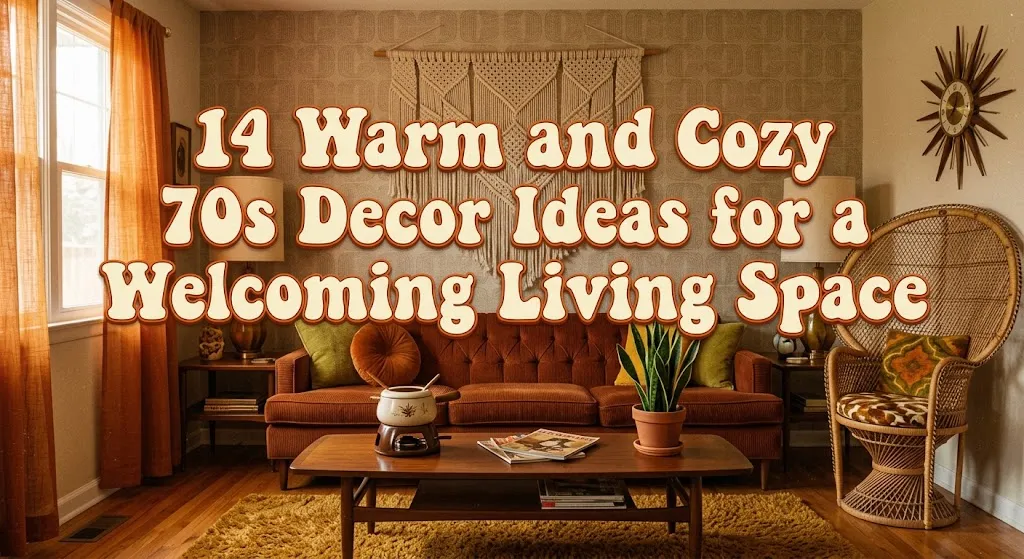
14 Warm and Cozy 70s Decor Ideas for a Welcoming Living Space
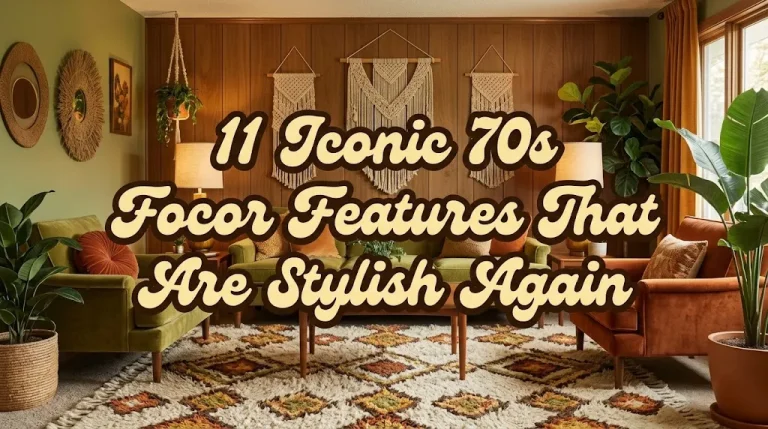
The 1970s aesthetic has undergone a sophisticated revival, moving far beyond gimmick-heavy novelties to embrace a warm, tactile, and deeply inviting style. Modern 70s decor is less about recreating a time capsule and more about capturing the era’s signature comfort—think rich earthy palettes, organic curves, and unpretentious materials that make a living room feel grounded and lived-in. Whether you want to introduce a subtle nod with a curved velvet armchair or fully commit to a sun-baked color scheme, blending 70s elements into a contemporary home adds instant soul and coziness. Here are 14 thoughtful, stylish ways to bring the warmth of 1970s design into your living space today.
1. Ground the Room in a Rich Earthy Color Palette
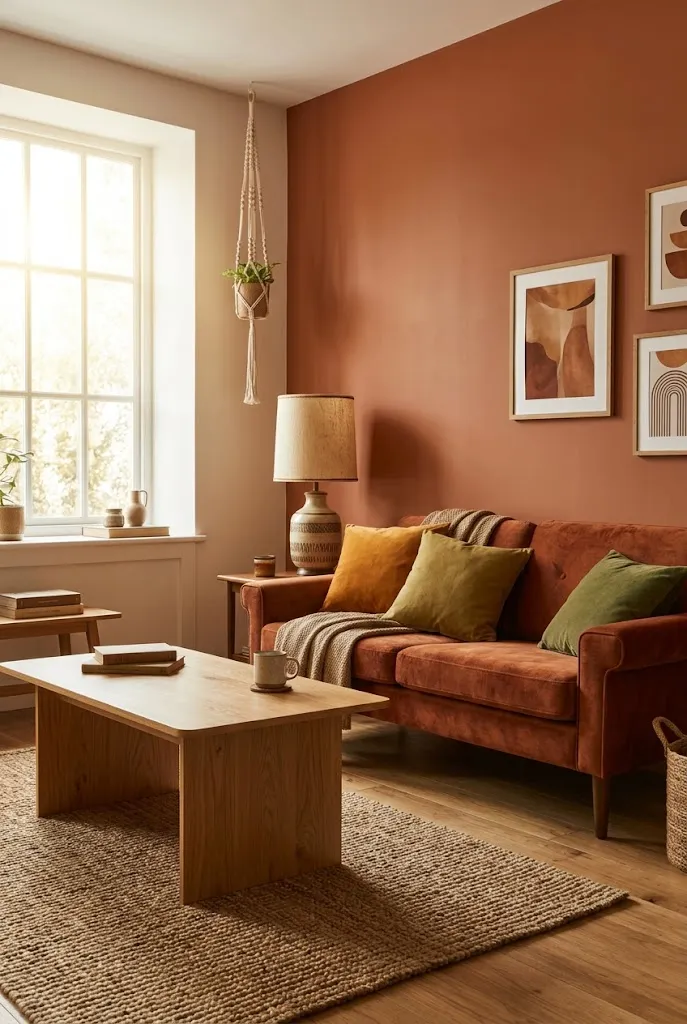
The foundation of any inviting 70s-inspired space begins with color. Move away from stark neutrals and embrace tones drawn directly from nature, such as burnt terracotta, mustard ochre, avocado green, and deep rust. These shades naturally absorb light and wrap a room in a welcoming warmth.
- Base Walls: Consider a warm, creamy undertone or a soft mushroom greige to keep the space feeling open before layering in color.
- Accent Walls: A muted rust or clay-toned paint color behind a sofa creates an instant focal point.
- Textile Pairing: Layer throw pillows and blankets in contrasting jewel tones like amber or olive.
2. Anchor the Seating Area With a Low-Profile Modular Sectional
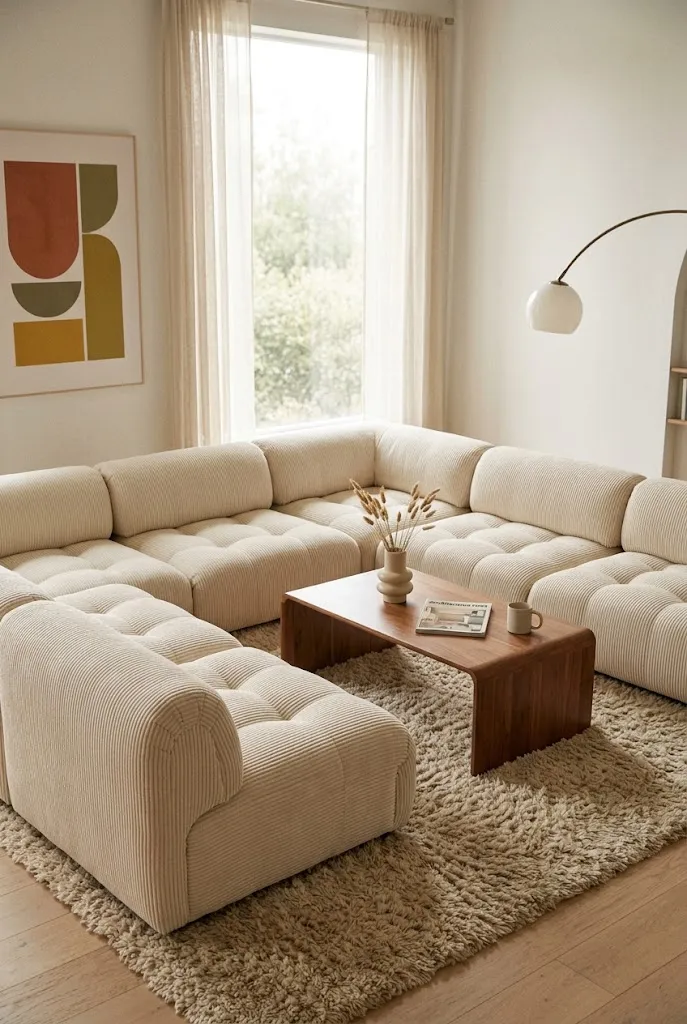
Seating in the 1970s prioritized lounging, relaxation, and conversation. Low-profile, deep-seated modular sectionals—often reminiscent of classic design icons like the Mario Bellini Camaleonda sofa—encourage effortless comfort and casual gathering.
- Scale: Keep furniture low to the ground to enhance vertical room height and create a relaxed, intimate atmosphere.
- Upholstery: Opt for heavy, tactile fabrics like corduroy, bouclé, or plush velvet to enhance the sensory experience.
- Arrangement: Set up modular pieces in an open, conversational curve rather than pushing everything flat against the walls.
3. Introduce Organic Curves With Kidney-Shaped Coffee Tables
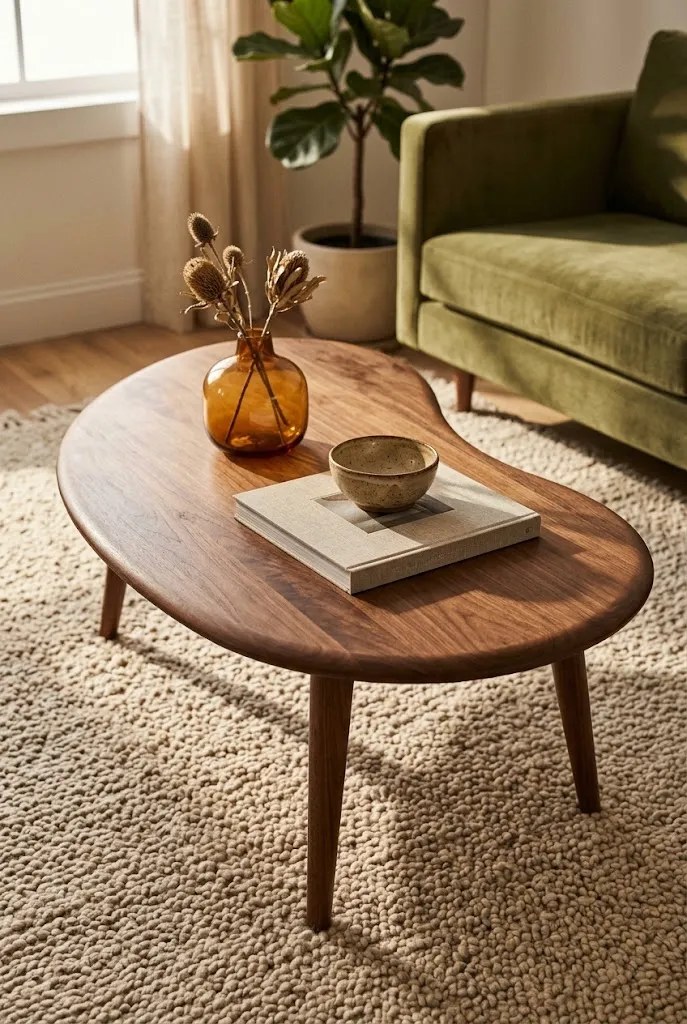
Sharp angles and rigid geometric lines took a backseat in the 70s to organic, flowing silhouettes. Incorporating a kidney-shaped, oval, or amoeba-inspired coffee table breaks up the boxy layout of a standard living room and improves flow.
- Material Choice: Look for rich walnut, travertine stone, or smoked glass to capture authentic period materiality.
- Styling: Keep tabletop decor minimal—a ceramic dish, a heavy art book, and an amber glass vase are plenty.
4. Make a Statement With Fluted Wood Paneling
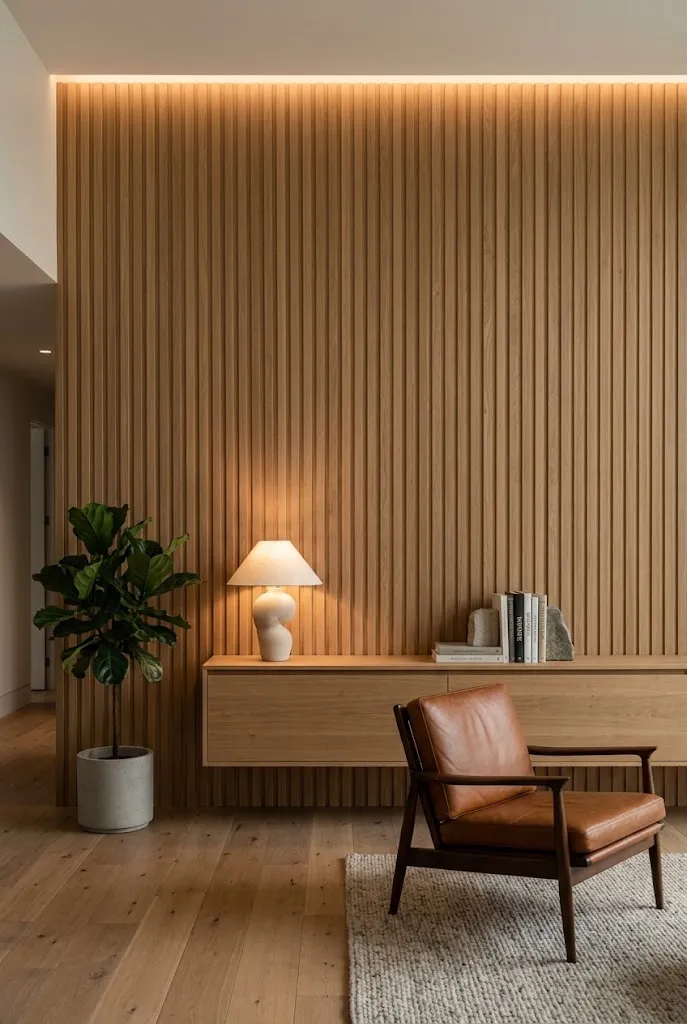
Wood paneling was a staple of 1970s architecture, but modern iterations use fluting, slats, or warm white oak to feel fresh and architectural rather than dark and dated. A partial accent wall or a custom media console surround adds gorgeous texture and depth.
- Placement Ideas: Apply fluted slats behind a media center, across a fireplace feature wall, or along a narrow entry transition into the living room.
- Finish: Stick to natural, matte wood tones rather than heavy, glossy lacquers.
5. Layer Groovy Geometric and Abstract Rugs
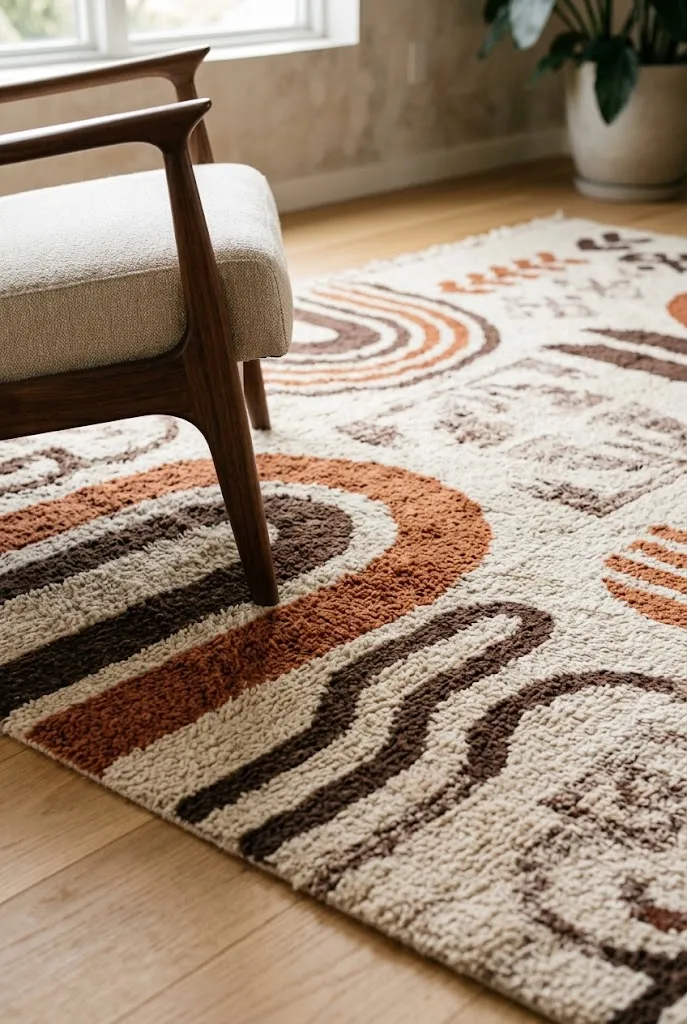
Floor coverings in the 70s were bold, expressive, and rich in texture. Introducing a rug with a graphic, curved geometric pattern or a rich, high-pile flokati instantly roots the room in a retro narrative without overwhelming the space.
- Pattern Play: Choose sweeping arches, wavy lines, or faded abstract motifs in muted burnt orange, cream, and chocolate brown.
- Texture Contrast: If your furniture is sleek, balance it out with a dense, plush pile that feels incredible underfoot.
6. Curate an Indoor Plant Corner With Statement Planters
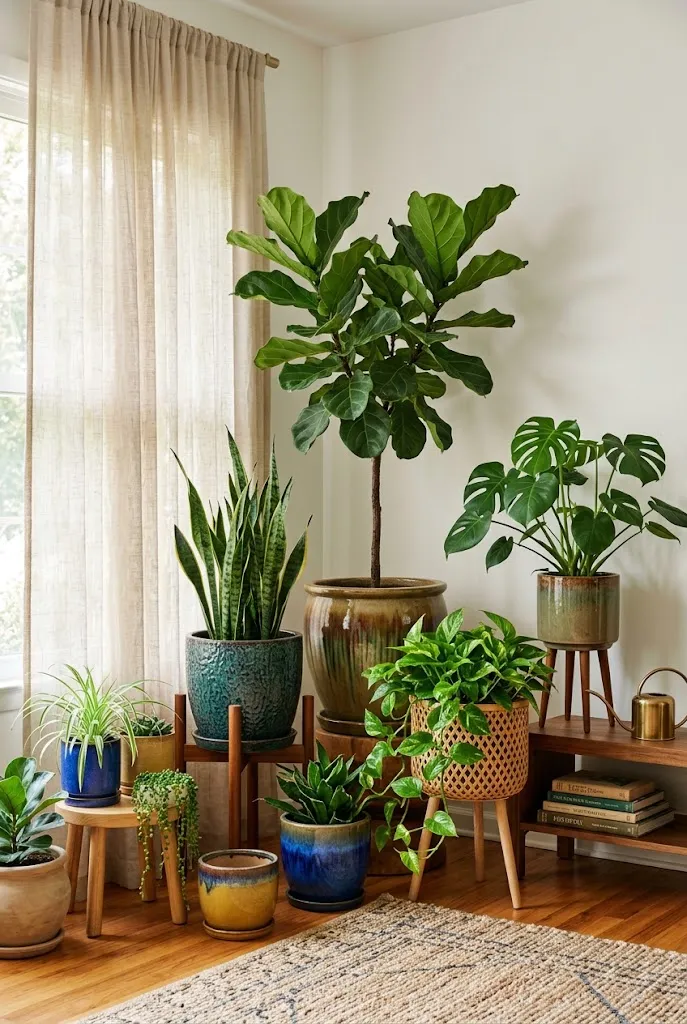
Houseplants experienced an enormous boom in the 1970s, turning living rooms into lush, indoor jungles. Bringing in varied botanical heights—like a towering fiddle leaf fig, trailing pothos, or sculptural snake plants—adds life, color, and organic geometry.
- Planter Style: Use ceramic pots with earthy reactive glazes, woven rattan plant stands, or elevated mid-century wooden legs.
- Arrangement: Cluster plants of varying heights in a sunlit corner rather than scattering them singly across the room.
7. Hang Groovy Globe and Sunburst Pendant Lighting
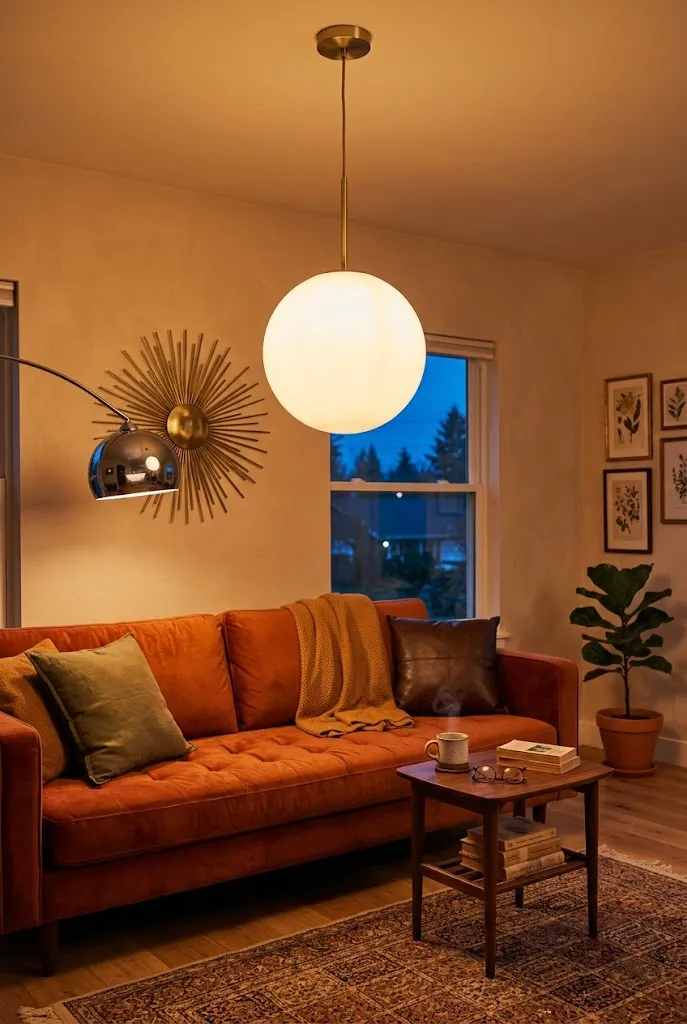
Lighting in the 1970s leaned heavily into sculptural shapes, smoked glass, chrome finishes, and warm brass. A statement overhead fixture or an oversized arc floor lamp can completely redefine the mood of the room.
- Warm Glow: Use warm-temperature bulbs (around 2700K) to replicate the cozy, golden ambiance characteristic of the era.
- Material Highlight: Look for milky white globe glass, perforated metal shades, or polished chrome arches.
8. Embrace Rattan, Cane, and Woven Textures
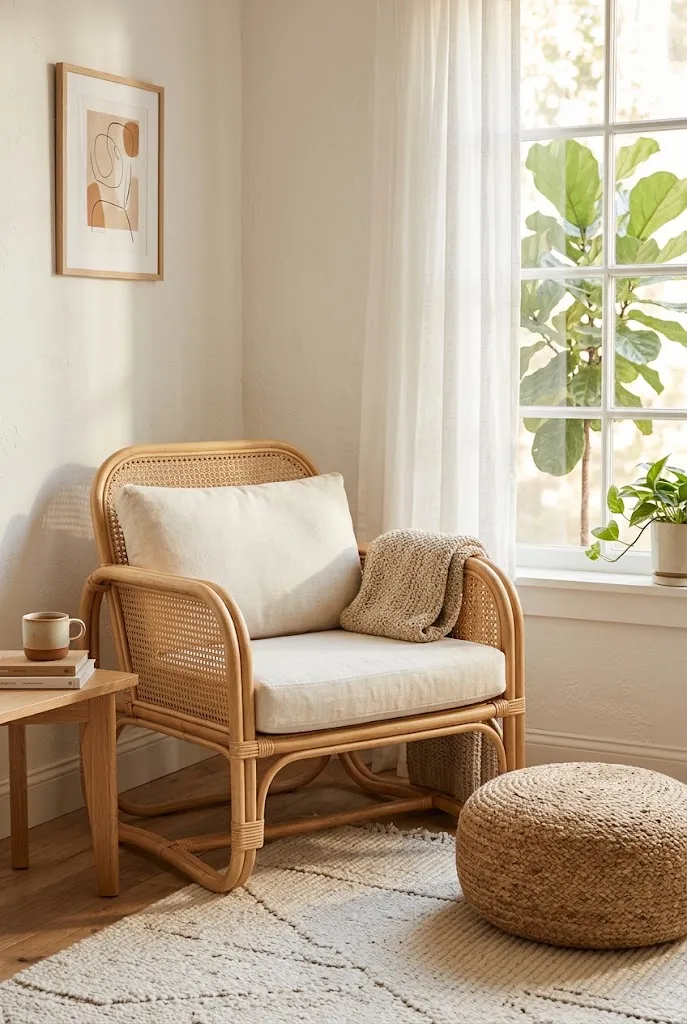
Natural, artisanal fibers played a massive role in creating the laid-back, bohemian side of 70s interior style. Integrating cane webbing, woven rattan, and rush seating introduces breezy texture that balances heavier velvet and wood pieces.
- Accent Seating: A classic rattan-backed lounge chair or a cane-paneled media cabinet brings lightness and artisanal craftsmanship to the space.
- Durability: These materials are remarkably resilient and age gracefully with everyday family use.
9. Add Tactile Depth With High-Pile Shag and Bouclé Throws
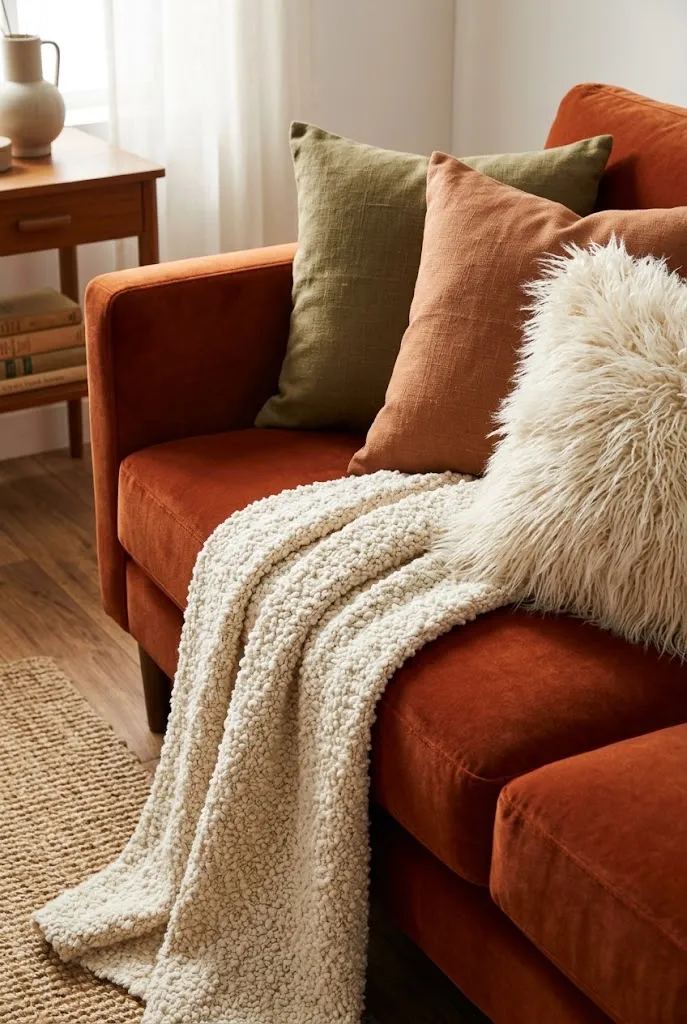
To maximize coziness, embrace tactile variety. The 1970s loved texture, making it the perfect excuse to layer heavy textiles, oversized cushions, and plush throws across sofas and armchairs.
- Textile Mix: Combine smooth leather with nubby bouclé and soft faux-fur or deep shag pillows.
- Visual Weight: These heavy tactile elements make a living room feel grounded, warm, and inviting during cooler months.
10. Frame the Space With Smoked Glass and Chrome Accent Tables
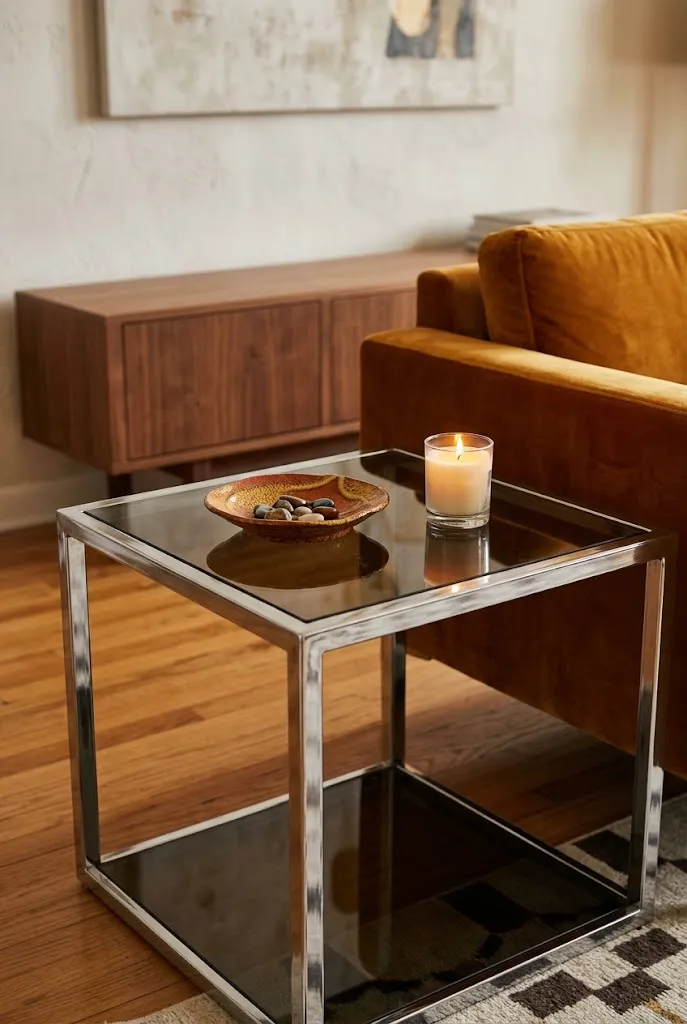
For a sleeker, slightly more high-end glam interpretation of 70s design, incorporate smoked glass and polished chrome. These reflective surfaces bounce light around the room while adding a sophisticated vintage edge.
- Side Tables: A cube-style smoked glass side table or a nesting chrome cocktail table keeps sightlines open in smaller spaces.
- Styling Tip: Pair metal-and-glass elements with warm woods to prevent the room from feeling too cold or sterile.
11. Create a Focal Point With a Retro Fireplace Surround
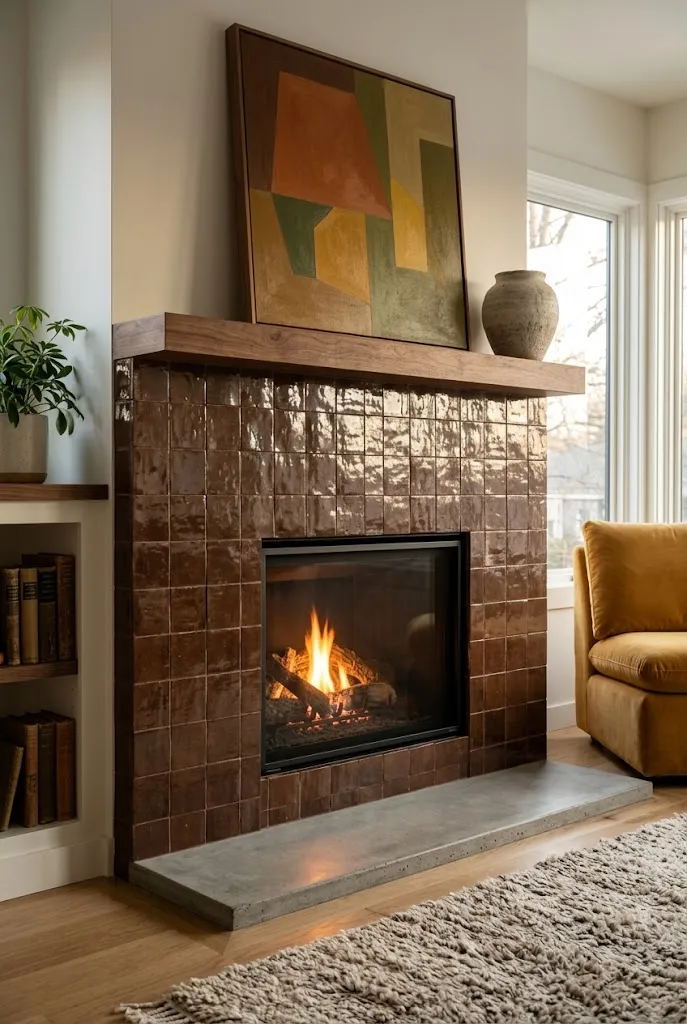
If your living room features a fireplace, you have a built-in anchor for a 70s-style refresh. Mid-century and 70s fireplaces often featured poured concrete, warm handmade zellige tiles, or freestanding conical metal designs.
- Tile Selection: Use square earth-toned ceramic tiles or glossy chocolate-brown zellige tiles around the firebox.
- Hearth Styling: Keep the mantel clean and simple with a single oversized abstract painting or a heavy ceramic urn.
12. Display Warm Amber and Brown Tinted Glassware
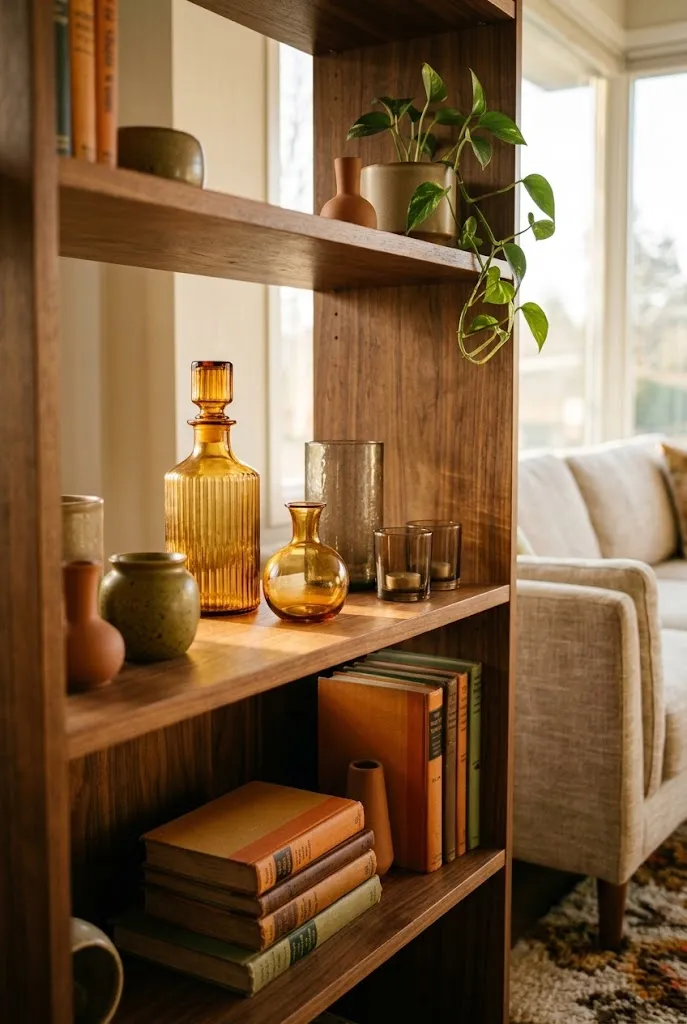
Accessories in the 70s celebrated rich, saturated glassware. Incorporating amber, olive green, or smoky brown glass vases, decanters, and candle holders on open shelves or coffee tables adds a glowing, nostalgic accent.
- Light Interaction: When afternoon sun hits tinted glass, it casts gorgeous, warm colored refractions across the room.
- Collection Display: Group varying heights and shapes together on a wooden tray for a curated, effortless look.
13. Hang Statement Macramé and Fiber Wall Art
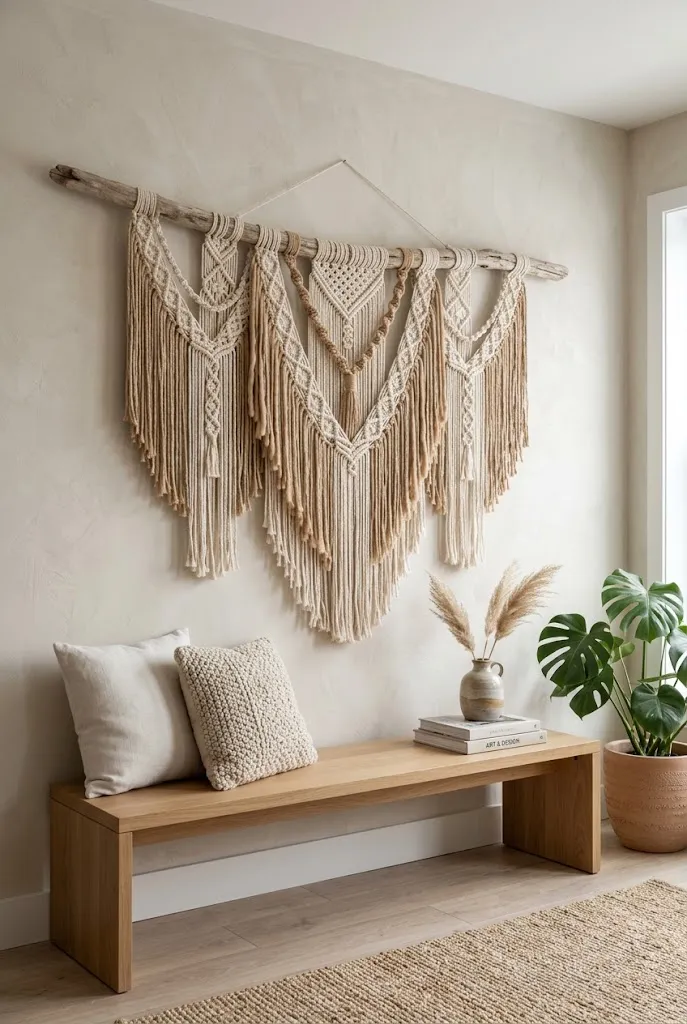
Textile wall hangings were ubiquitous in 1970s homes, adding warmth and sound-softening texture to bare drywall. Modern interpretations have evolved past basic crafts into sophisticated, architectural fiber art pieces.
- Material Notes: Look for natural cotton cord, raw wool roving, and organic wooden dowels or driftwood mounts.
- Scale: A large-scale piece can easily replace a traditional canvas painting above a living room sofa.
14. Curate a Retro Gallery Wall With Vintage Botanical Prints
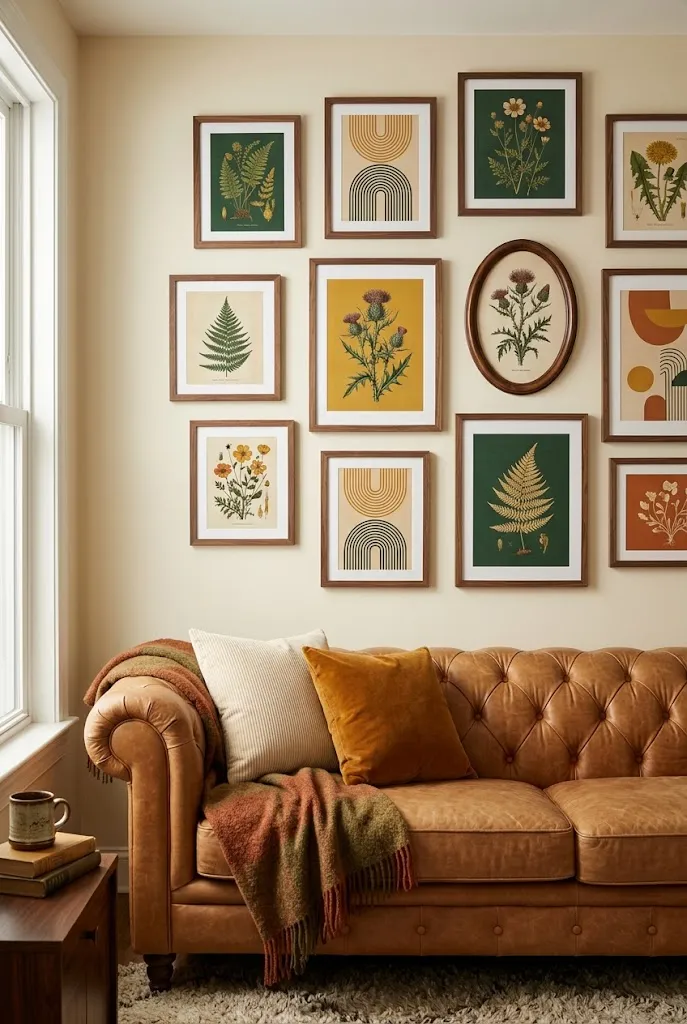
Personalize your living space with a gallery wall that leans into vintage botanical illustrations, abstract line art, and warm-toned photography prints framed in simple walnut or brass frames.
- Cohesive Palette: Ensure the prints share common color threads—such as muted greens, mustards, and warm creams—to keep the display looking intentional.
- Frame Alignment: Mix rectangular frames with an occasional curved oval frame for a playful nod to 70s asymmetry.