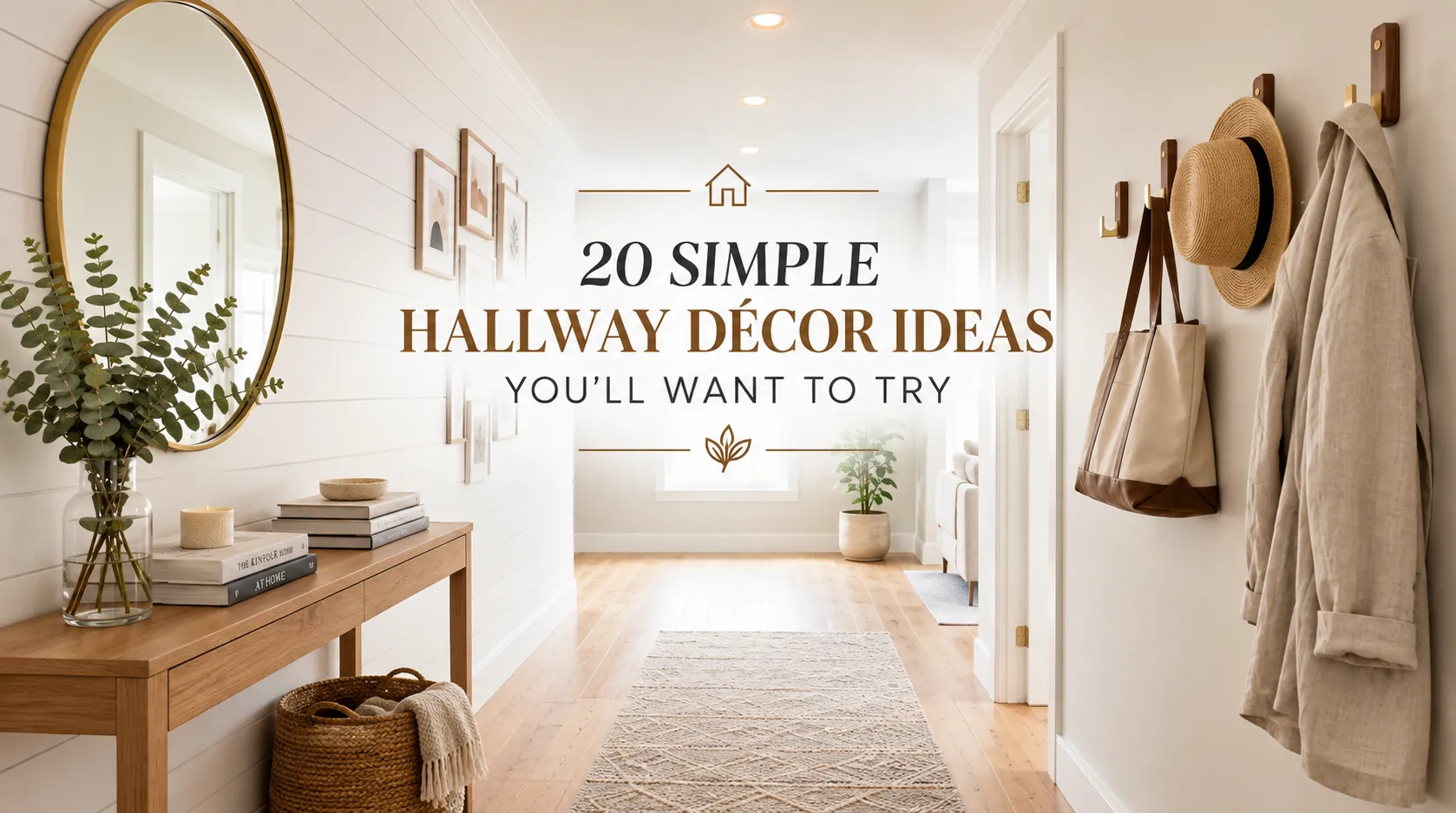
20 Simple Hallway Décor Ideas You’ll Want to Try
The hallway is often the most overlooked area of the home, yet it sets the tone for everything that follows. Because these transition spaces are typically narrow, windowless, or awkwardly proportioned, decorating them requires a thoughtful balance of function and visual interest. Whether you are working with a tight apartment corridor or a long suburban entryway, small updates can dramatically shift the entire feel of your home. From clever wall treatments and multi-functional storage to layered lighting and statement mirrors, these 20 simple hallway decor ideas offer practical ways to turn a plain passageway into an intentional, welcoming space.
1. Anchor the Space With a Slim Console Table
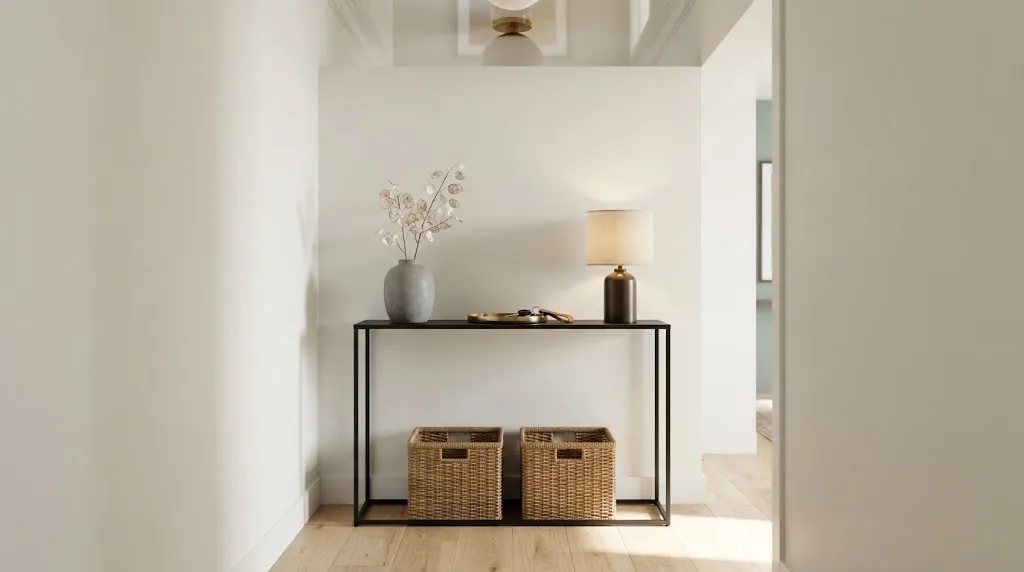
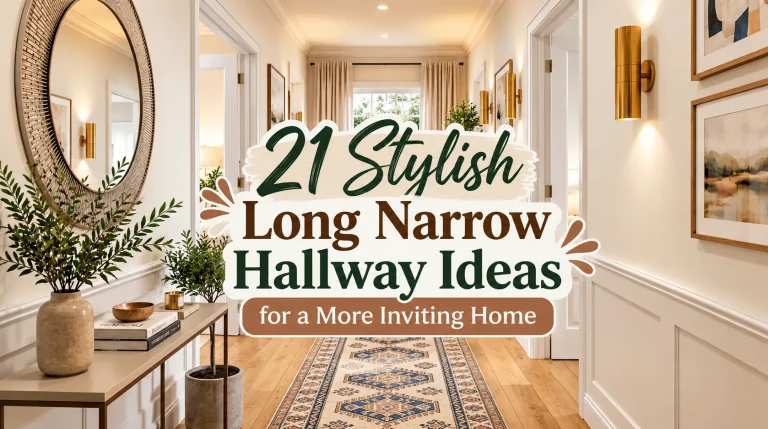
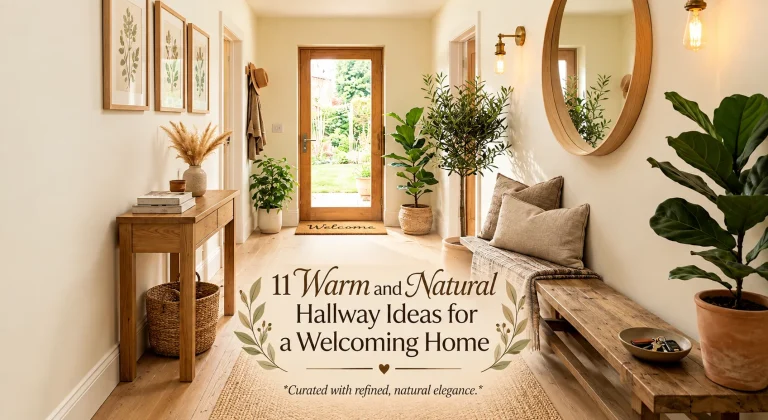
A narrow console table provides an instant focal point without obstructing foot traffic. Choose a piece with a depth of ten to twelve inches so it sits comfortably against the wall.
- Opt for open metal frames or slender wooden legs to keep the floor plan feeling open.
- Style the surface minimally with a small tray for keys, a single ceramic vase, and a small stack of books.
- Keep everyday clutter out of sight by storing fabric bins underneath the table.
2. Bounce Light With an Oversized Round Mirror
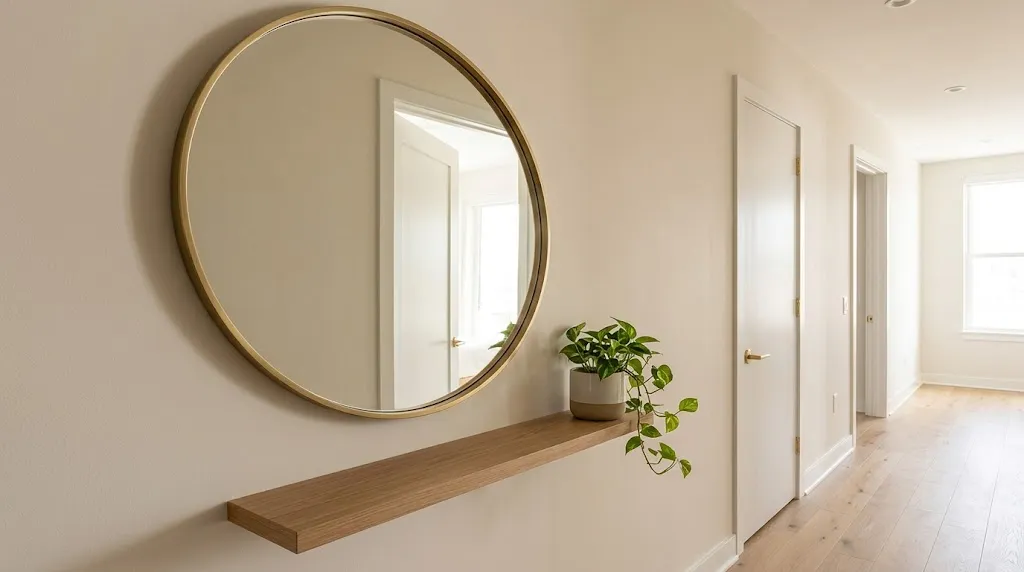
Long hallways often suffer from a lack of natural light. Hanging a large round mirror breaks up the rigid linear architecture and amplifies whatever light is available.
- Position the mirror opposite a doorway or next to a sconce to maximize reflection.
- Choose a frame material—such as brushed brass, black iron, or warm walnut—that ties into your home’s existing hardware.
- Ensure the center of the mirror hangs at eye level for balanced visual weight.
3. Introduce Warmth With a Runner Rug
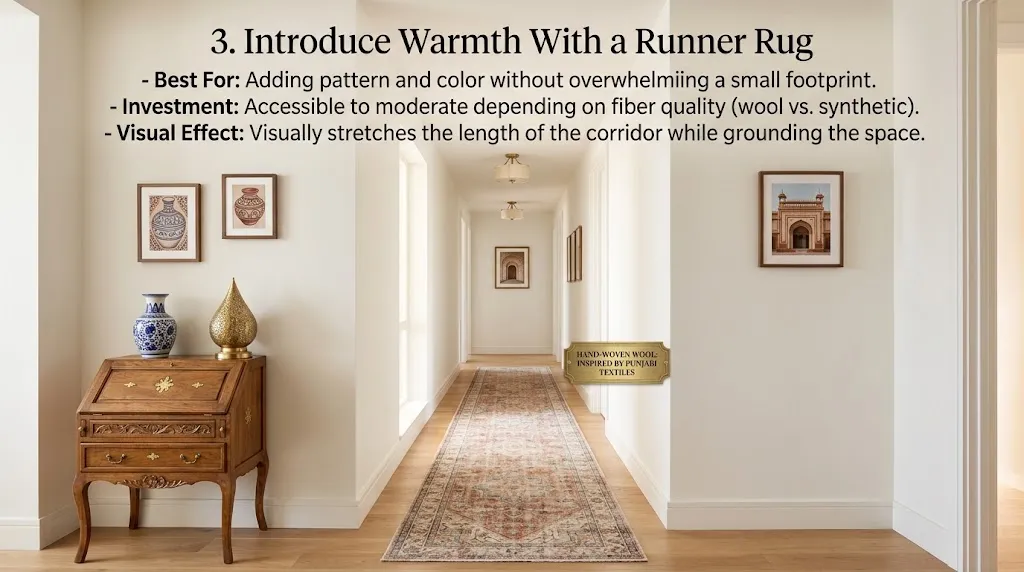
Bare flooring can make a hallway feel cold and echoing. A well-chosen runner adds instant texture, dampens sound, and protects high-traffic zones.
- Best For: Adding pattern and color without overwhelming a small footprint.
- Investment: Accessible to moderate depending on fiber quality (wool vs. synthetic).
- Visual Effect: Visually stretches the length of the corridor while grounding the space.
4. Layer Wall Sconces for Ambient Lighting
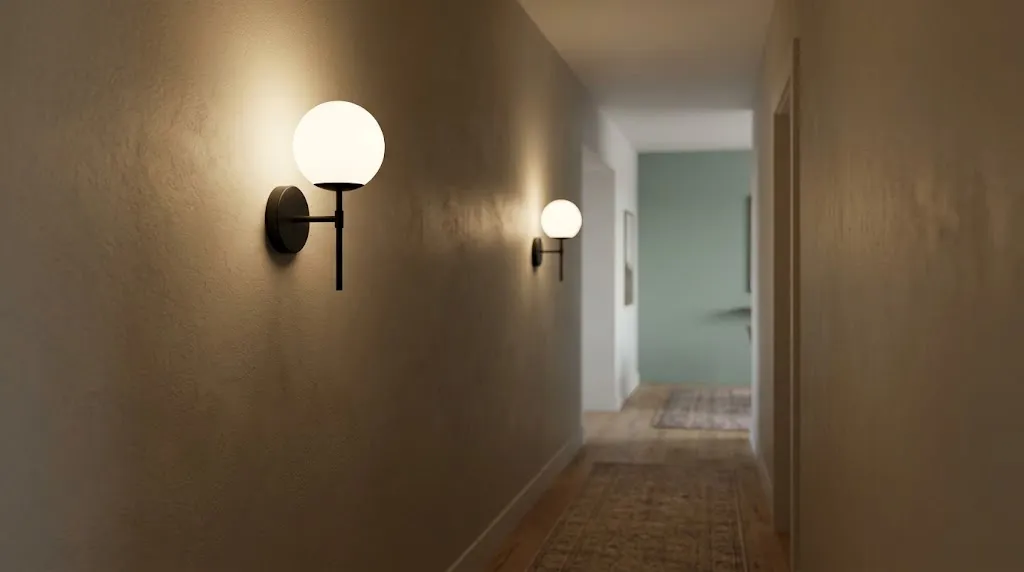
Overhead flush-mount lights can feel harsh and clinical in a narrow corridor. Swapping or supplementing them with wall sconces creates a warm, layered glow.
Common Mistake: Hanging sconces too high, which draws the eye upward and isolates the lighting from eye level.
Better Approach: Mount sconces approximately sixty to sixty-five inches from the floor, spacing them evenly along long walls to distribute light softly.
5. Build a Low Storage Bench Beneath the Window
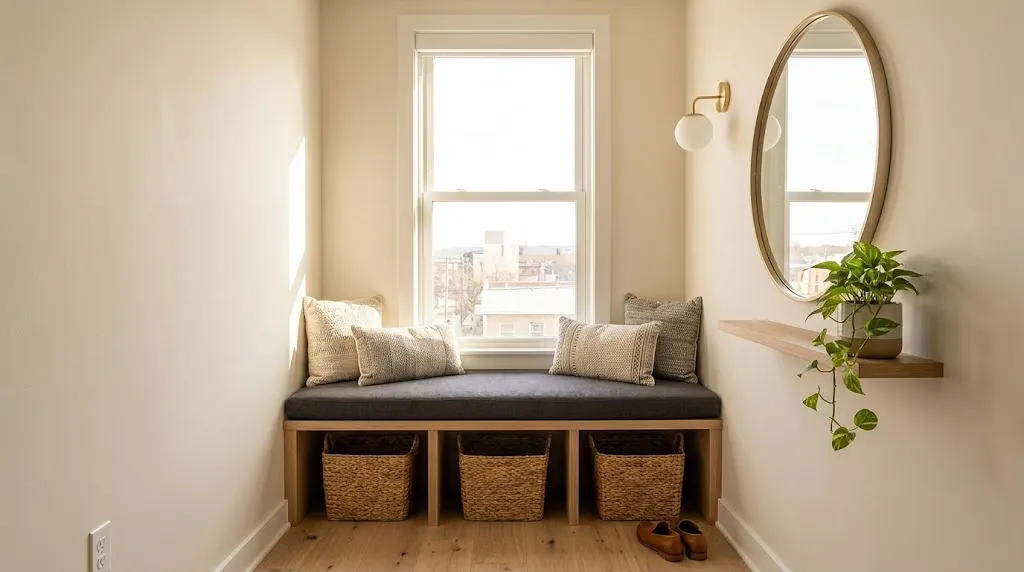
If your hallway features a window or an open alcove, a built-in or freestanding low bench transforms dead space into a functional drop zone.
- Pair the bench with a custom seat cushion in a durable linen or canvas fabric.
- Use the underside for shoe baskets or hidden pull-out drawers.
- Add a couple of textured throw pillows to soften the hard architectural lines of the corridor.
6. Create a Simple Gallery Wall
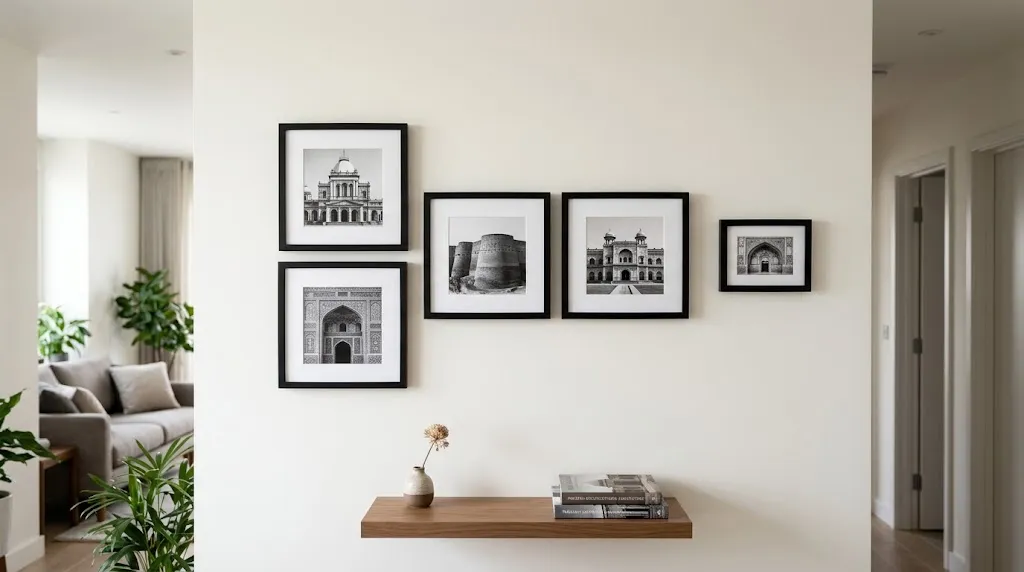
A hallway is an ideal gallery space because family members and guests naturally slow down as they move through it.
- Use matching frames—such as all thin black wood or all natural oak—to maintain cohesion along a tight corridor.
- Stick to a unified color palette for the artwork, like black-and-white photography or neutral botanical prints.
- Lay the arrangement out on the floor first before nailing anything into the drywall.
7. Add Architectural Depth With Beadboard Paneling
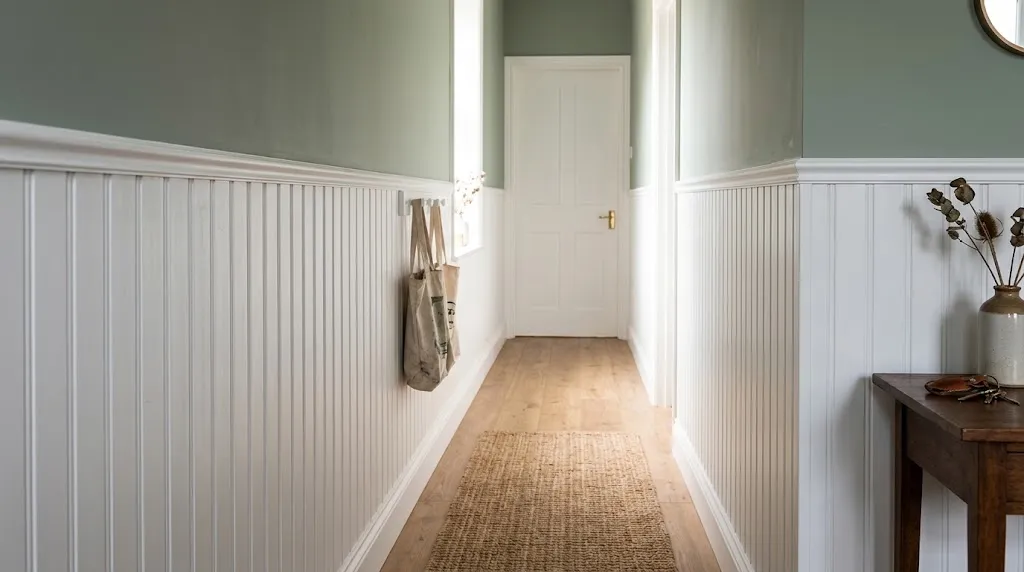
Flat, blank drywall can make a hallway feel uninspired. Installing half-wall beadboard or board-and-batten introduces classic architectural character.
| Option | Effect / Advantage | Best Fit |
| Beadboard | Adds traditional texture and visual rhythm | Cottage, farmhouse, or transitional homes |
| Board-and-Batten | Creates clean vertical lines and a tailored look | Modern, craftsman, or contemporary spaces |
Paint the paneling in a durable satin or semi-gloss finish to withstand scuffs from shoes and bags.
8. Suspend Pendant Lights for Statement Scale
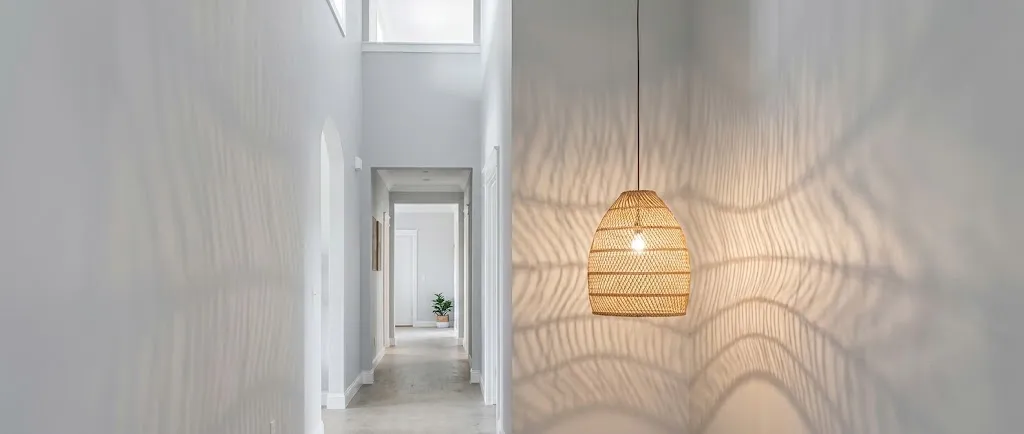
In a hallway with high ceilings, standard ceiling fixtures can get lost. Hanging a series of small pendants or one statement fixture draws the eye upward and adds design impact.
- Ensure there is adequate clearance beneath the fixture—at least seven feet from the floor to the bottom of the pendant.
- Choose shades made of natural materials like woven rattan, ribbed glass, or aged brass to cast interesting patterns of light.
9. Hang Minimalist Shaker Peg Rails
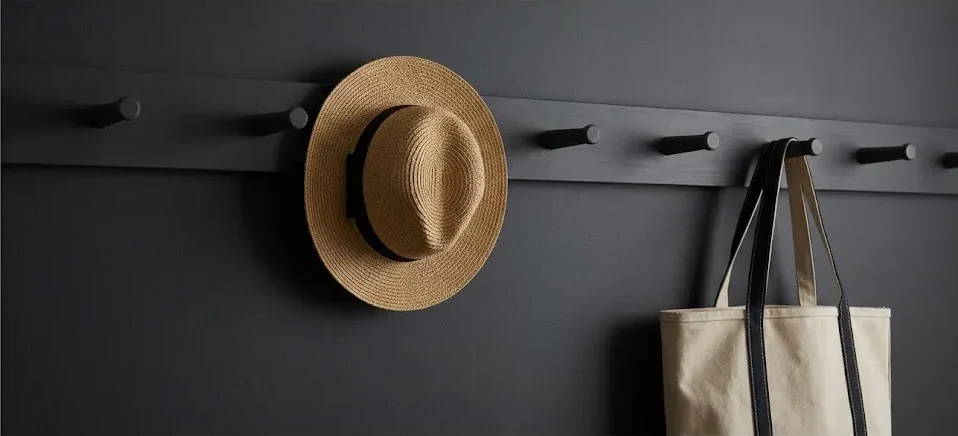
Shaker peg rails offer a timeless, functional solution for hanging coats, hats, and canvas bags without cluttering the floor space.
- Install the rail continuously down one side of the hallway at a standard adult height.
- Leave some pegs intentionally empty to let the woodwork shine rather than overcrowding the wall.
- Paint the peg rail the exact same color as the wall for a sophisticated, monochromatic built-in look.
10. Maximize Vertical Space With Tall Built-In Bookshelves
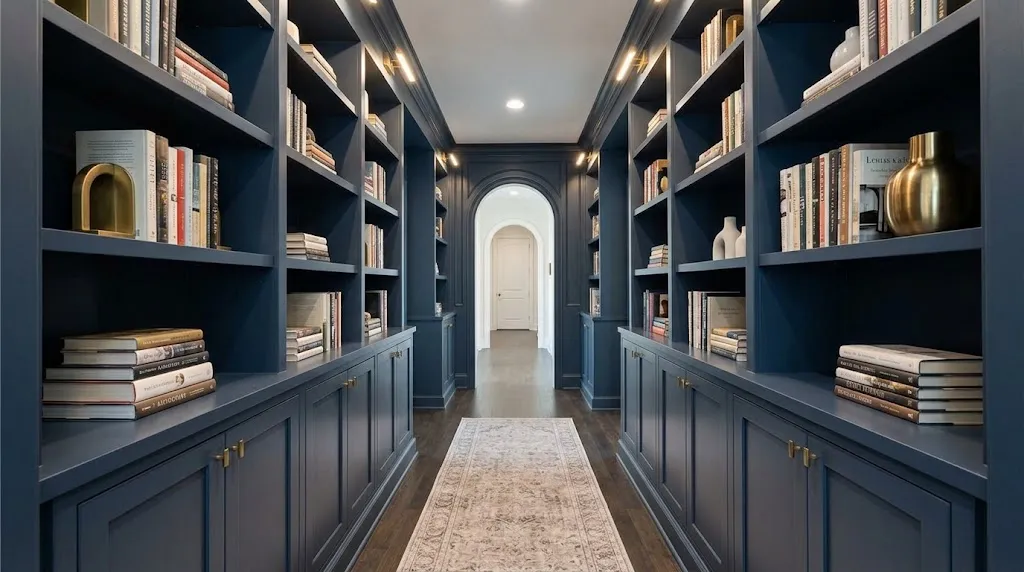
If your hallway is wide enough to accommodate extra depth, custom or modular floor-to-ceiling bookshelves turn a dead passageway into a personal library.
- Keep the lower shelves closed with cabinet doors to hide household overflow.
- Style open upper shelves with books turned spine-out alongside a few ceramic objects.
- Paint the entire bookcase and surrounding trim the same color to make the structure feel integrated.
11. Warm Up the Atmosphere With Textured Wallpaper
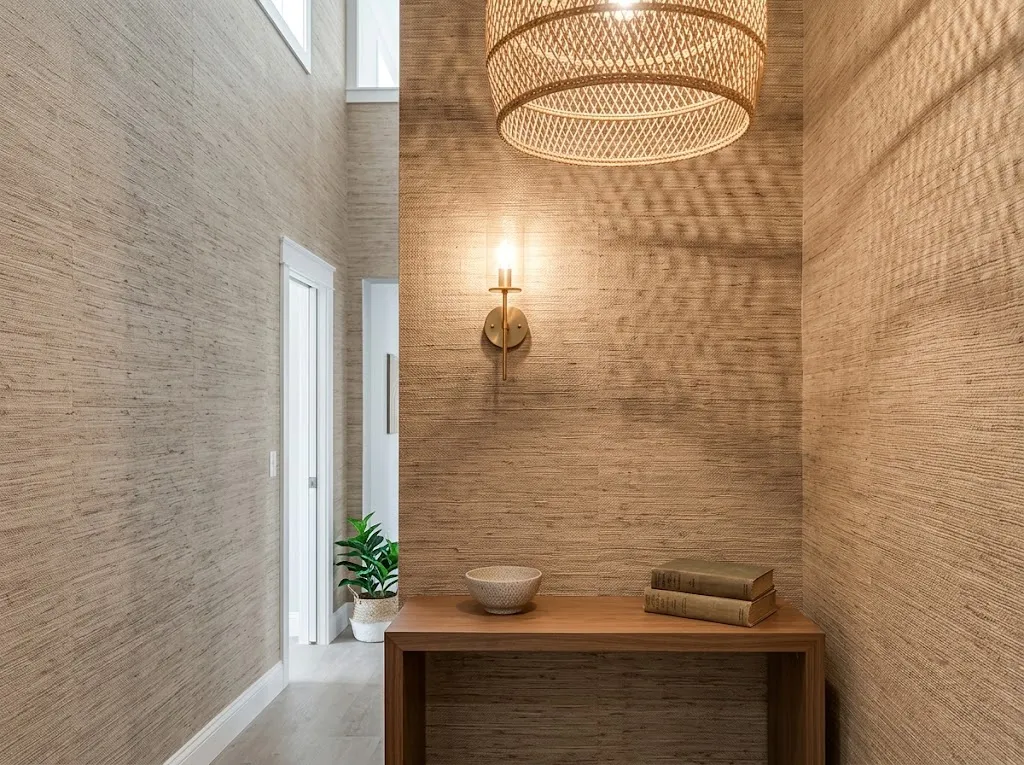
A small hallway is the perfect canvas for bold design risks because you spend less time in it than a living room or kitchen.
- Choose a subtle grasscloth, a tonal geometric print, or a soft botanical mural.
- Textured wallpapers absorb sound, making hollow-sounding corridors feel quieter and more intimate.
- Pair patterned wallpaper with simple, clean-lined trim to keep the space from feeling chaotic.
12. Lean an Oversized Framed Art Piece
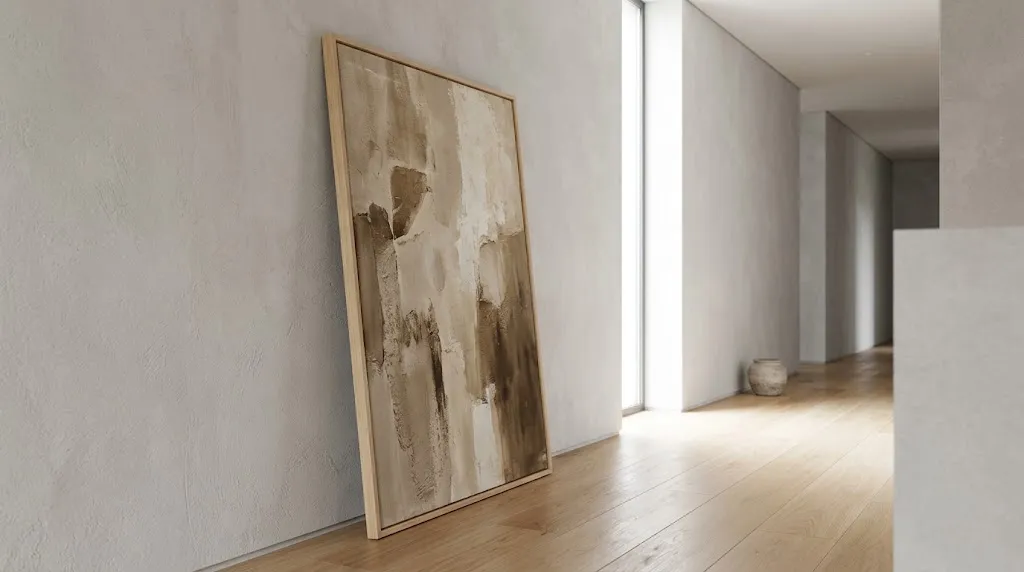
Instead of hanging art at standard heights, lean a large-scale framed canvas or print directly on the floor against the wall.
- Best For: Renters who want to avoid putting multiple holes in the drywall.
- Investment: Accessible.
- Visual Effect: Creates a relaxed, art-forward, gallery-like atmosphere.
13. Incorporate Greenery With Hanging or Trailing Plants
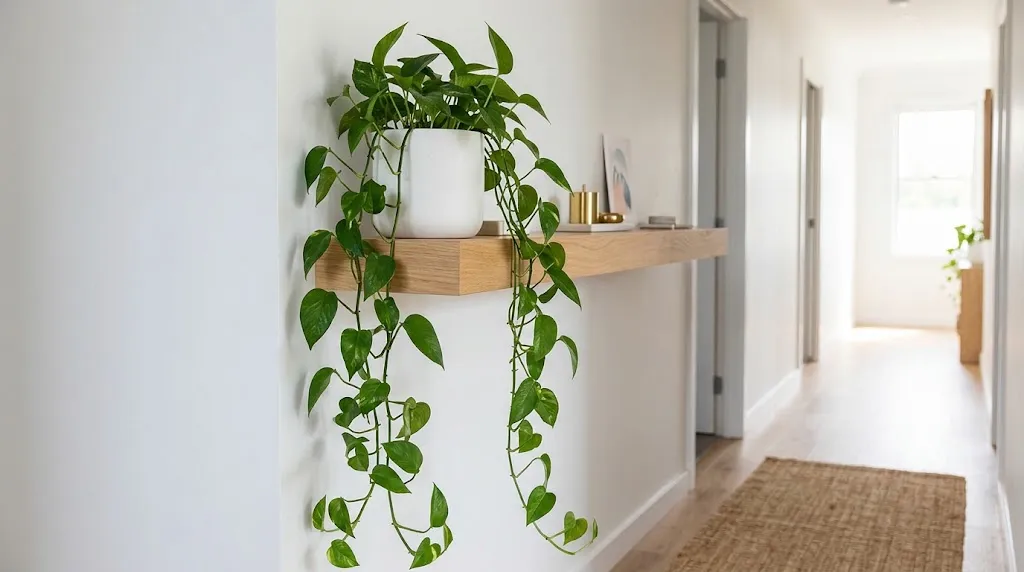
Plants breathe life into utilitarian spaces like hallways, softening hard corners and introducing organic movement.
- If your hallway lacks natural light, choose resilient low-light varieties like Pothos, Snake Plants, or ZZ plants.
- Use brass wall brackets to hang trailing vines from upper corners, keeping floor and surface space clear.
- Pair green foliage with simple terracotta or matte-white ceramic pots.
14. Keep Shoes Tidy With a Tilt-Out Cabinet
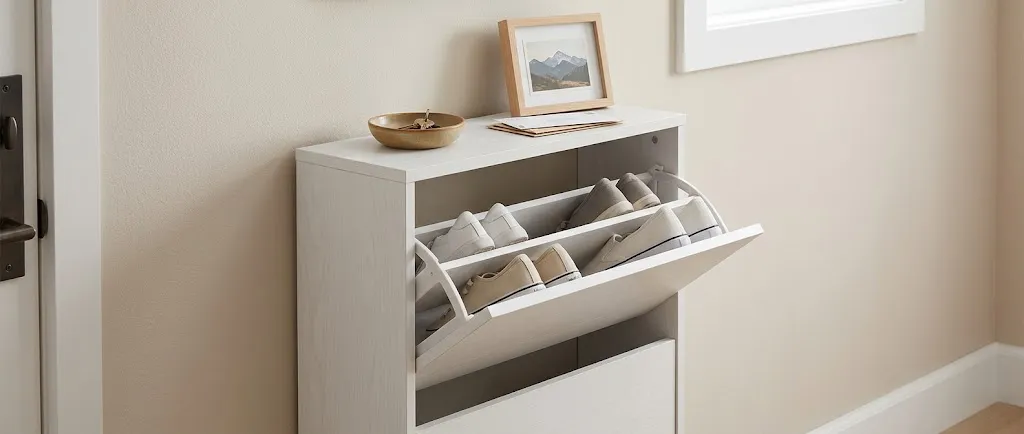
Shoe clutter is the number one enemy of a clean hallway. A slim profile tilt-out shoe cabinet conceals footwear while taking up minimal floor space.
- Look for cabinets with a depth of less than ten inches that can sit flush against tight walls.
- Use the flat top surface as a drop zone for mail, keys, and a small decorative catchall tray.
- Choose a wood veneer or painted finish that blends seamlessly with your baseboards.
15. Make a Statement With Bold Moody Paint
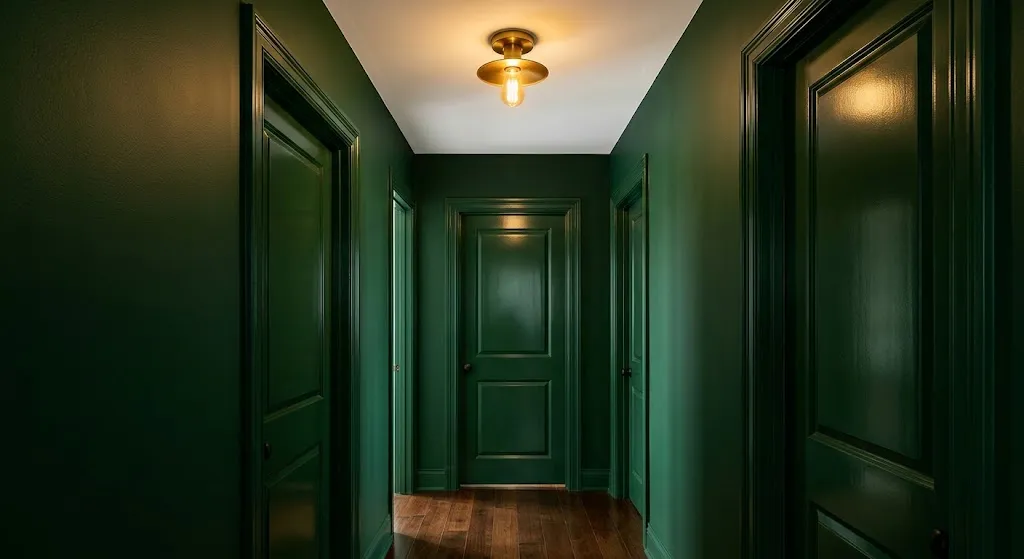
Do not be afraid of dark colors in a hallway. Embracing deep, moody tones creates a cozy, dramatic cocoon effect as you transition between rooms.
- Consider rich shades like charcoal, deep olive, forest green, or moody navy.
- Pair dark walls with crisp white ceilings and bright light fixtures to maintain contrast.
- Use high-gloss paint on doors and trim for a sophisticated reflective finish.
16. Install Floating Shelves for Display and Function
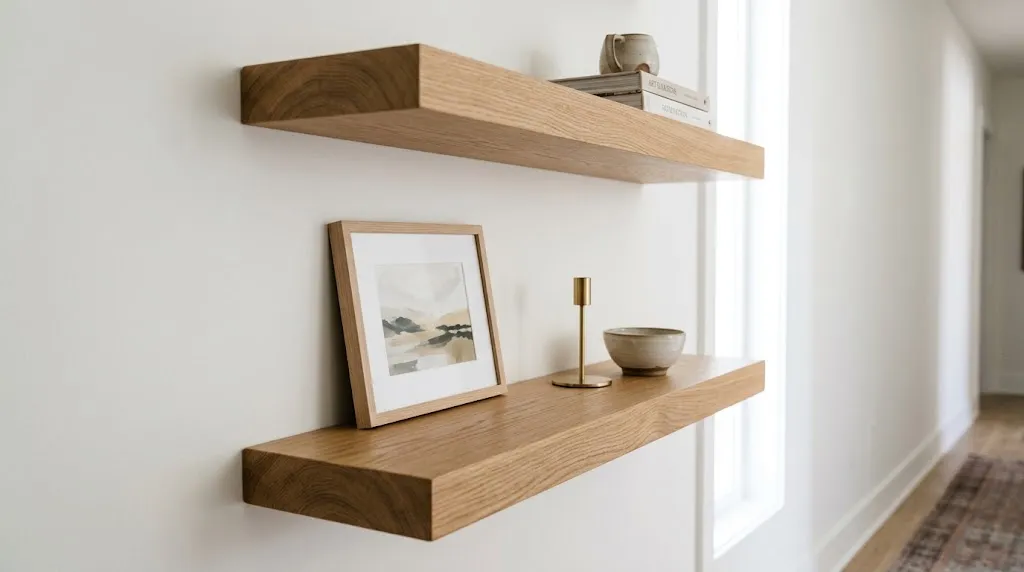
Floating shelves provide vertical display space without the visual weight of bulky cabinetry or freestanding furniture.
Editor’s Note: Keep items on hallway floating shelves relatively flat and secure, as vibrations from walking traffic can cause unstable objects to shift.
- Use thick, chunky wood shelves to add warmth to plain white or gray drywall.
- Style with a mix of framed photographs, small sculptures, and lightweight decorative objects.
17. Define Zones With Two-Tone Paint Blocking
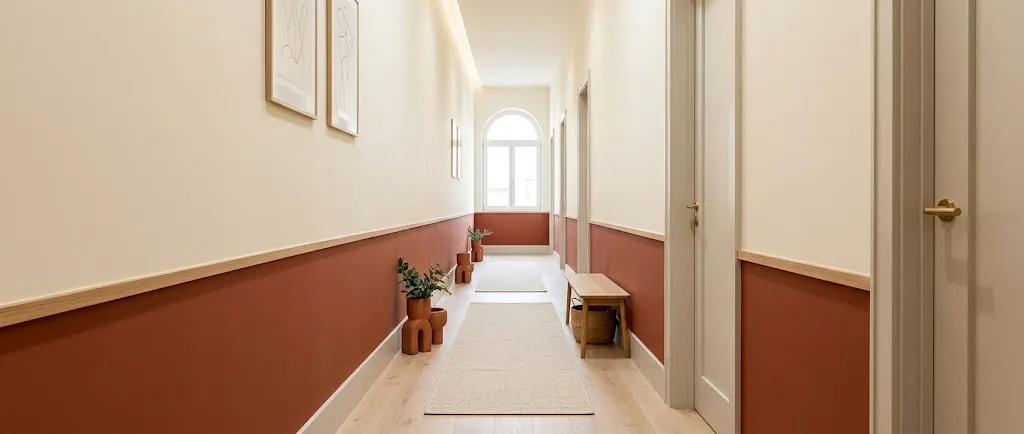
Paint blocking is an affordable way to add architectural interest and visually manipulate the proportions of a long hallway.
- Paint the bottom third of the wall in a darker, grounding color and keep the upper two-thirds light to enhance perceived ceiling height.
- Separate the two color blocks with a thin, painted wooden chair rail or a crisp hand-painted dividing line.
18. Add Texture With Woven Storage Baskets
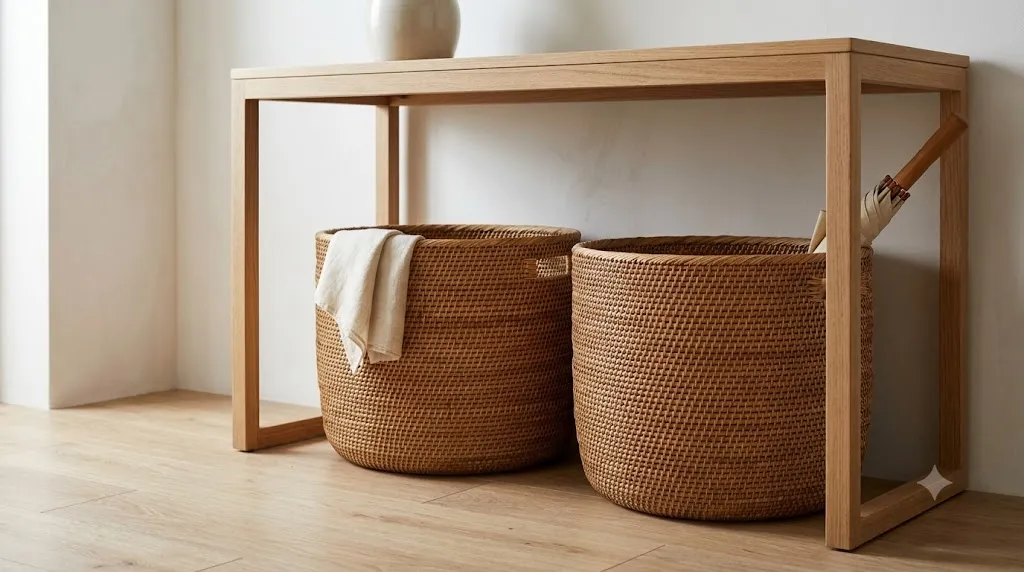
Baskets are both decorative and deeply practical, offering an effortless way to corral items in transitional spaces.
- Place a pair of large woven seagrass or rattan baskets beneath a console table or bench.
- Use them to store seasonal accessories like winter scarves, umbrellas, and dog leashes.
- The natural fibers introduce organic warmth that breaks up tile or hardwood flooring.
19. Integrate Flush-Mount Picture Ledges
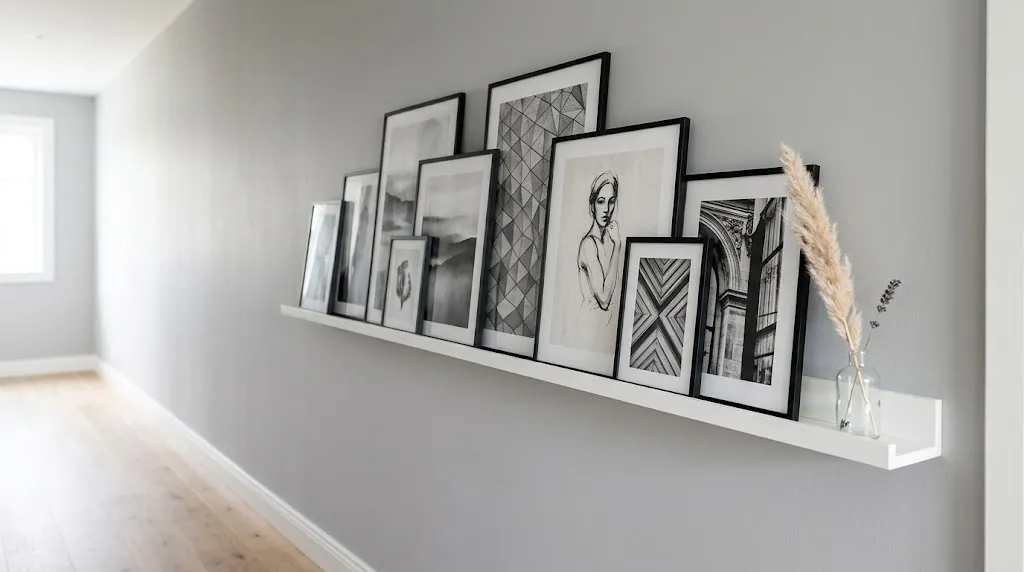
Picture ledges take up minimal depth while allowing you to easily swap out artwork, prints, and family photos whenever you want a fresh look.
- Install a shallow picture ledge down one side of a wide corridor.
- Layer frames of varying heights, overlapping them slightly for an effortless, curated arrangement.
- Keep the frames thin and lightweight to ensure safety in high-traffic zones.
20. Introduce an Accent Door With Rich Wood Stain
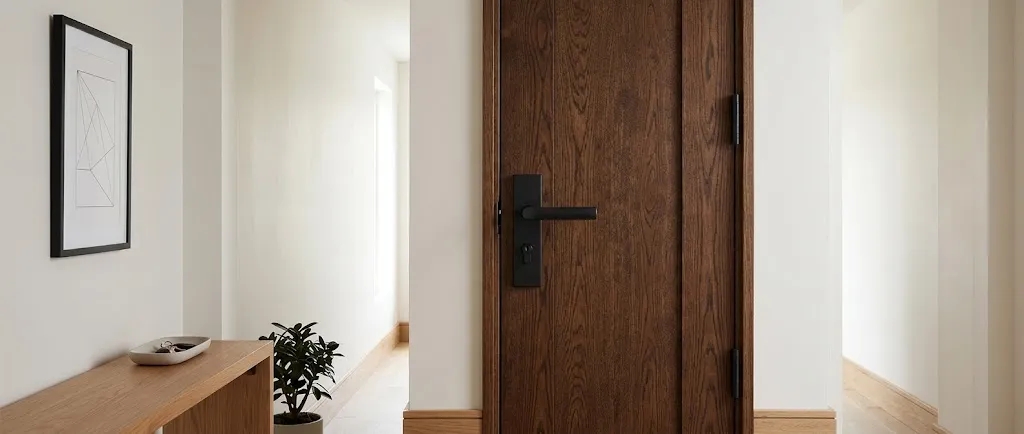
Hallways are often defined by a series of closed doors leading to different rooms. Transforming those doors can completely change the character of the space.
- Swap standard builder-grade hollow doors for solid wood doors stained in a warm walnut or white oak finish.
- Update the doorknobs and hinges to matching aged brass or matte black hardware.
- The natural wood grain adds instant high-end character to an otherwise sterile corridor.