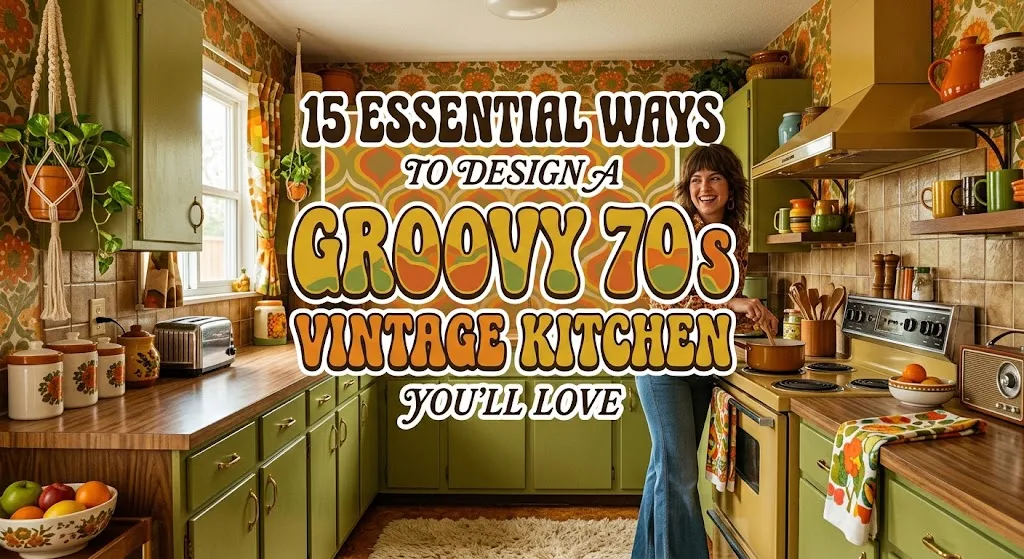
15 Essential Ways to Design a Groovy 70s Vintage Kitchen You’ll Love
The 1970s kitchen is back, but forget the dark, cramped quarters and heavy clutter of the past. Today’s modern 70s vintage kitchen revival focuses on warm, sun-baked palettes, tactile organic materials, and playful details that feel fresh, sophisticated, and deeply welcoming. Whether you are planning a full-scale renovation or looking for accessible ways to inject retro personality into a modern builder-grade home, blending 1970s character into your culinary space creates an atmosphere full of soul. Here are 15 essential ways to design a groovy 70s kitchen you will love spending time in.
1. Embrace Warm Earth-Tone Cabinetry
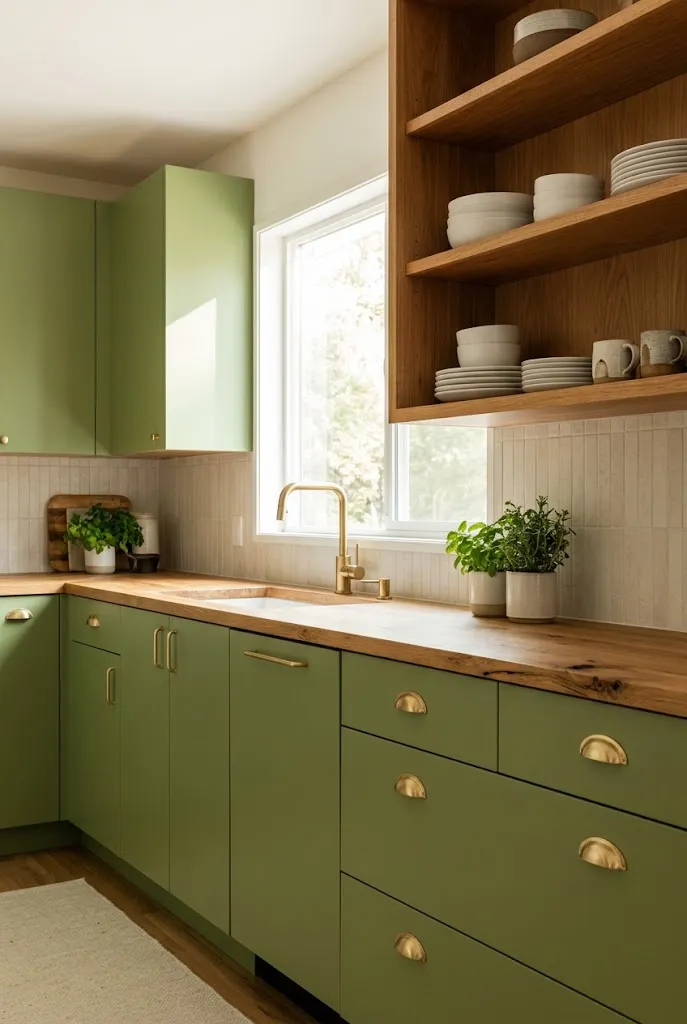
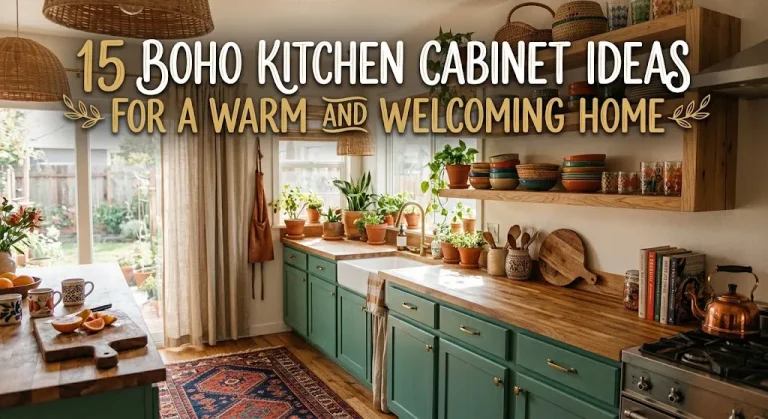
Gone are the days of stark, clinical all-white kitchens. The 1970s aesthetic thrives on rich, saturated earth tones that wrap the room in warmth. Think avocado green, muted mustard, burnt terracotta, or deep chocolate brown.
- Paint or Refinish: If you have existing flat-panel or shaker cabinets, a coat of muted clay or olive paint can instantly transform the entire room.
- Hardware Contrast: Pair these warm cabinet colors with brushed brass or polished chrome pulls to amplify the retro aesthetic.
2. Incorporate Retro Formica Countertops with Metal Trim
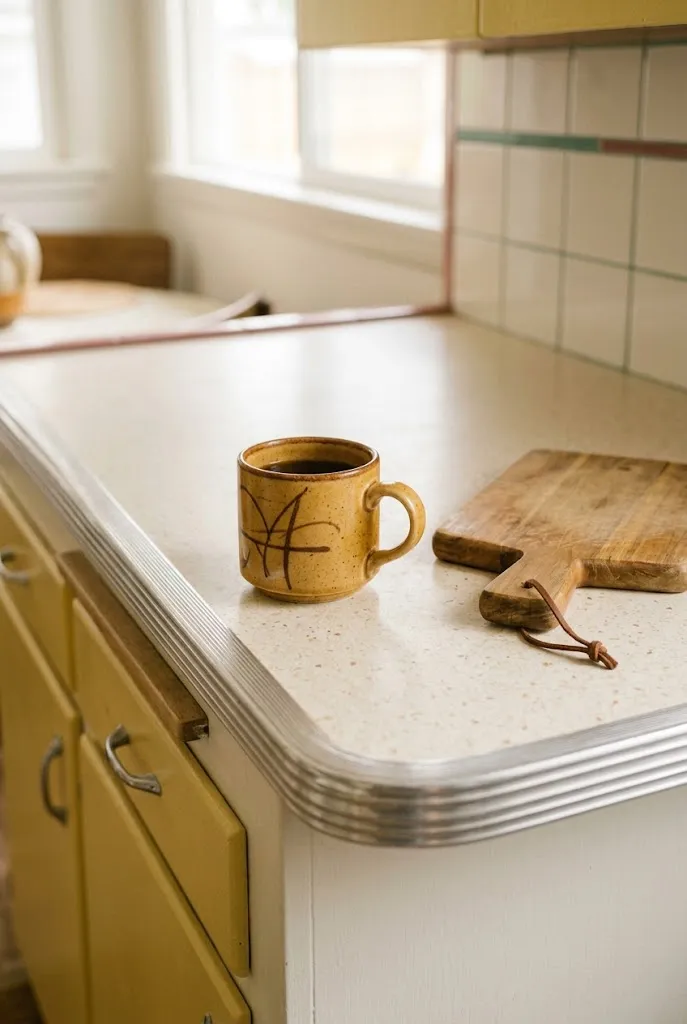
Formica and laminate countertops were a defining staple of mid-century and 1970s homes. Today, they are celebrated for their durability, clean look, and authentic vintage appeal—especially when finished with classic metal or bullnose edging.
- Pattern Play: Look for subtle boomerang patterns, terrazzo flecks, or solid retro solids like warm almond or soft turquoise.
- Practical Advantage: They offer a budget-friendly way to introduce authentic period texture without committing to expensive stone.
3. Install Geometric or Bold Floral Backsplash Tiles
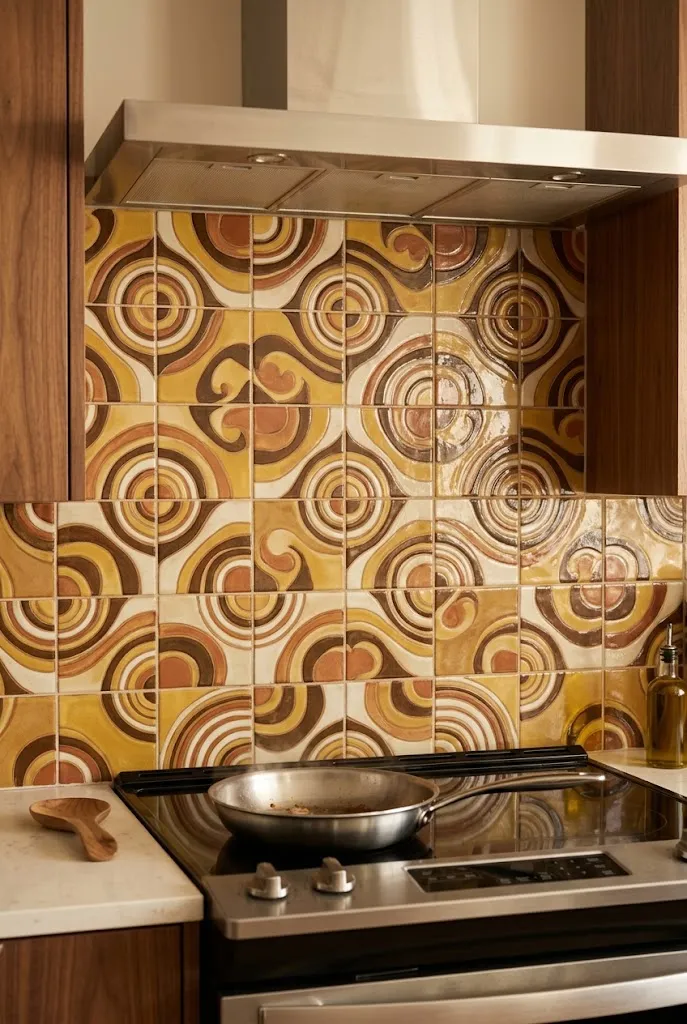
Backsplashes are the perfect canvas for experimenting with 70s-inspired pattern and color. Swirling geometric shapes, mustard-and-brown flower motifs, or glossy square zellige tiles add instant visual interest above the stove or sink.
- Focal Point: Keep surrounding elements simple so the patterned tile acts as the primary artistic statement in the room.
- Layout Ideas: Consider a retro checkerboard pattern using warm terracotta and cream tiles for a timeless touch.
4. Feature Open Wooden Shelving Stacked with Vintage Ceramics
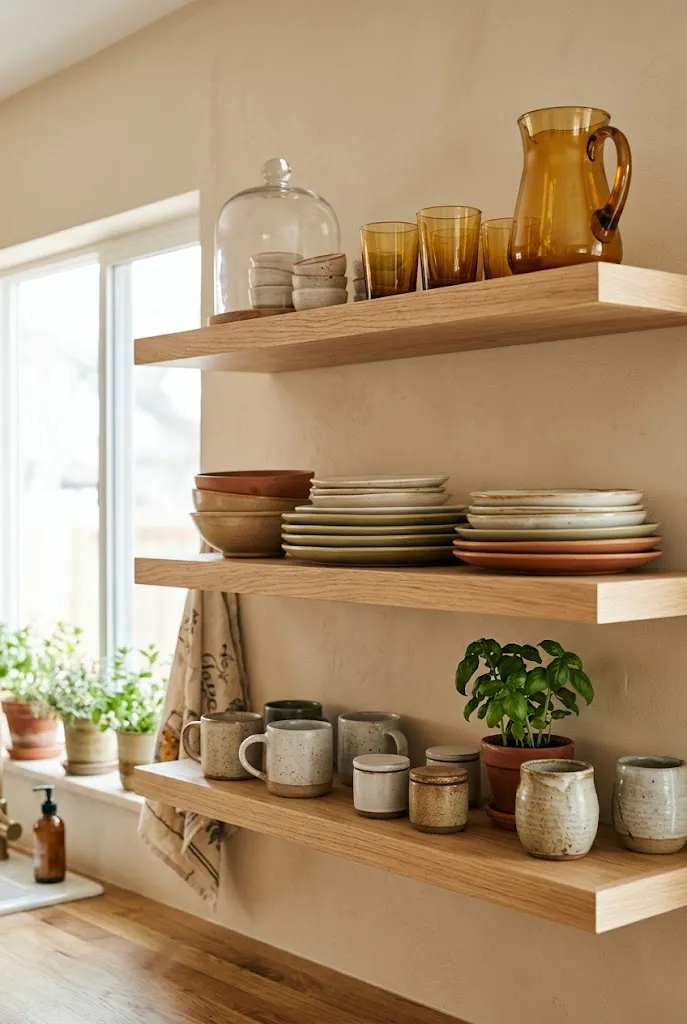
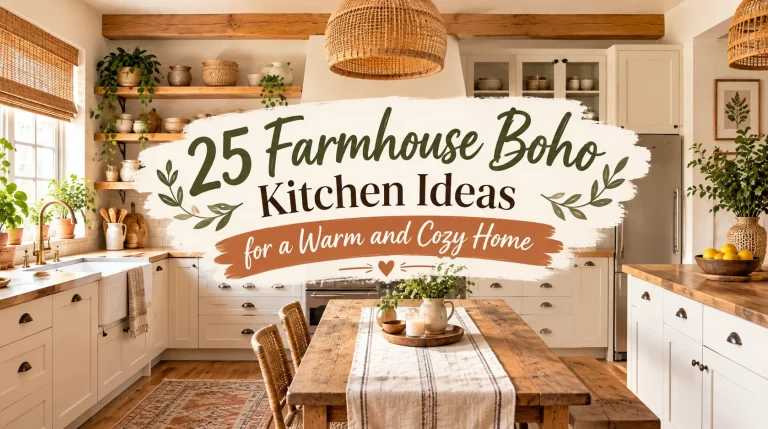
Heavy upper cabinets can sometimes make a kitchen feel closed-in. Swapping a section of upper cabinets for open natural wood shelving allows you to display collections of heavy stoneware, amber pitchers, and handmade pottery.
- Wood Choice: Opt for warm white oak, teak, or walnut to align with authentic 1970s furniture tones.
- Styling Tip: Mix functional kitchenware with decorative ceramic pieces to keep the shelves looking curated rather than cluttered.
5. Add a Statement Drop-Down Globe or Pendant Light
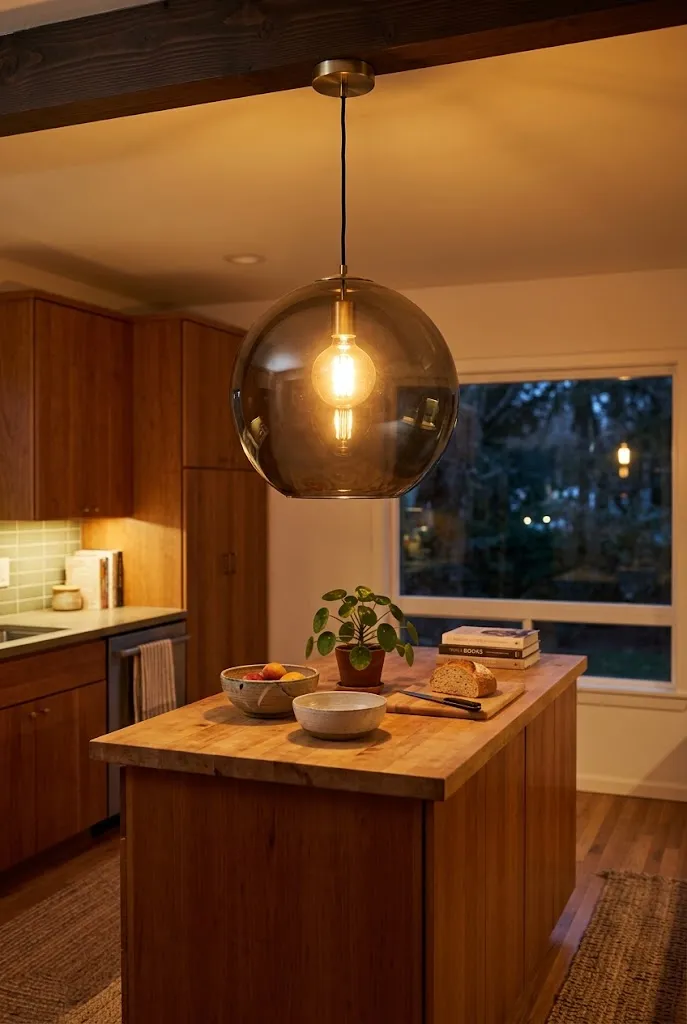
Lighting sets the mood in any space. In a 70s revival kitchen, oversized smoked glass globes, brushed brass dome fixtures, or multi-tier pendant lights anchor the dining or island area with undeniable retro flair.
- Warm Ambience: Choose warm Edison-style bulbs to cast a soft, golden glow over your countertops during evening cooking sessions.
- Scale: Don’t shy away from oversized fixtures; 70s design loved bold proportions.
6. Lay Down a Retro-Patterned Washable Runner Rug
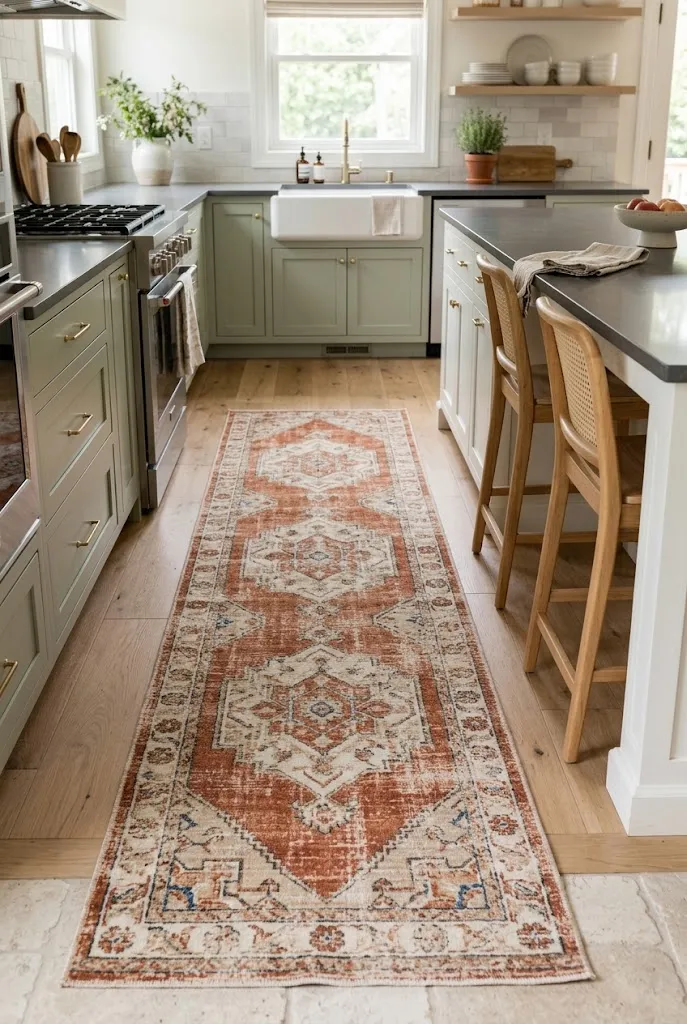
Kitchen floors endure heavy foot traffic, making a runner rug both a practical and stylistic necessity. A runner featuring a faded bohemian medallion, wavy retro stripes, or organic abstract shapes softens hard tile or wood flooring.
- Material Consideration: Choose low-pile, washable materials so spills and kitchen mishaps are easy to manage.
- Color Integration: Pick a runner that ties together the dominant accent colors found in your cabinets and accessories.
7. Showcase a Collection of Amber and Avocado Glassware
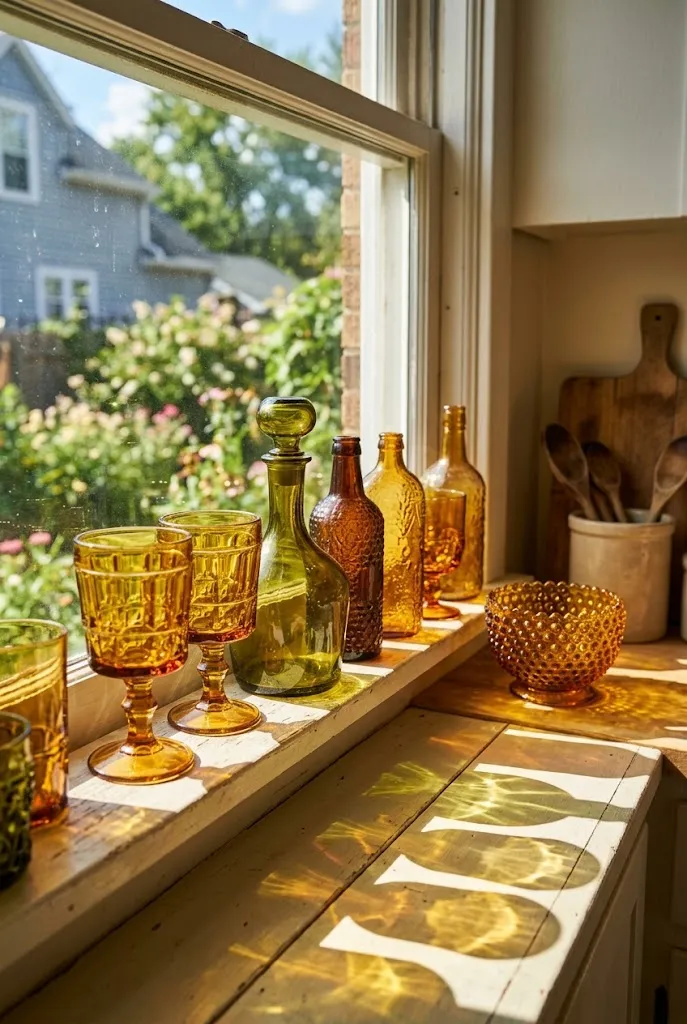
Accessories do heavy lifting when building a vintage aesthetic. Displaying authentic 70s glassware—such as heavy amber glass goblets, olive green decanters, and hobnail bowls—on open counters or windowsills brings instant nostalgia.
- Light Play: Place glassware where natural sunlight can pass through them, creating beautiful colored refractions across the kitchen.
- Source: Thrift stores, antique malls, and estate sales are goldmines for authentic mid-century and 70s glassware collections.
8. Introduce Rattan and Cane Cabinet Fronts or Barstools
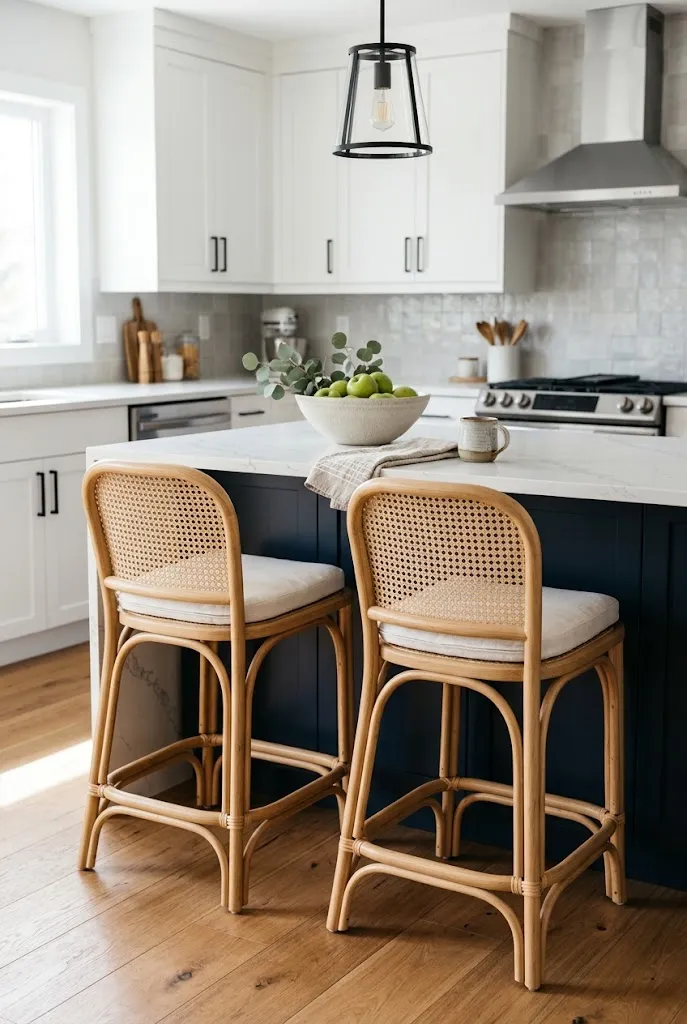
Natural woven fibers bring a relaxed, organic texture that balances out the slick surfaces of appliances and countertops. Cane webbing and rattan accents were massive in 1970s bohemian design.
- Island Seating: Barstools featuring curved rattan frames and woven cane backs add instant architectural warmth to a kitchen island.
- Cabinet Inserts: Consider replacing solid wood cabinet door panels with cane mesh for a lighter, breezier aesthetic.
9. Upgrade to Vintage-Inspired Retro Appliances
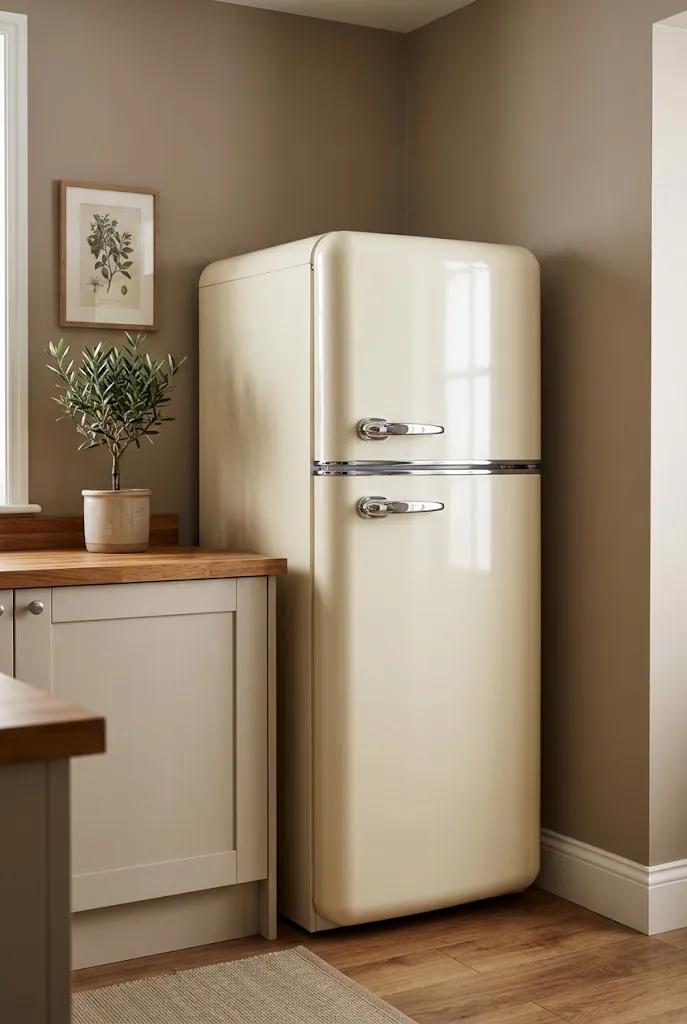
Major appliance brands now offer refrigerators, ranges, and small countertop appliances styled with retro silhouettes, chrome handles, and charming pastel or bold colorways.
- Statement Fridge: A retro-style refrigerator in soft cream, mint green, or cherry red can become the ultimate conversation piece in a kitchen.
- Countertop Charm: Even smaller items like a retro toaster or a classic drip coffee maker contribute to the overarching vibe.
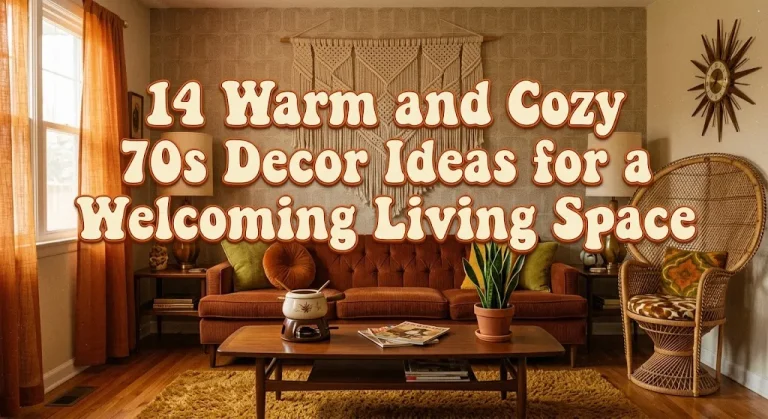
10. Hang Macramé Plant Hangers for Lush Botanical Life
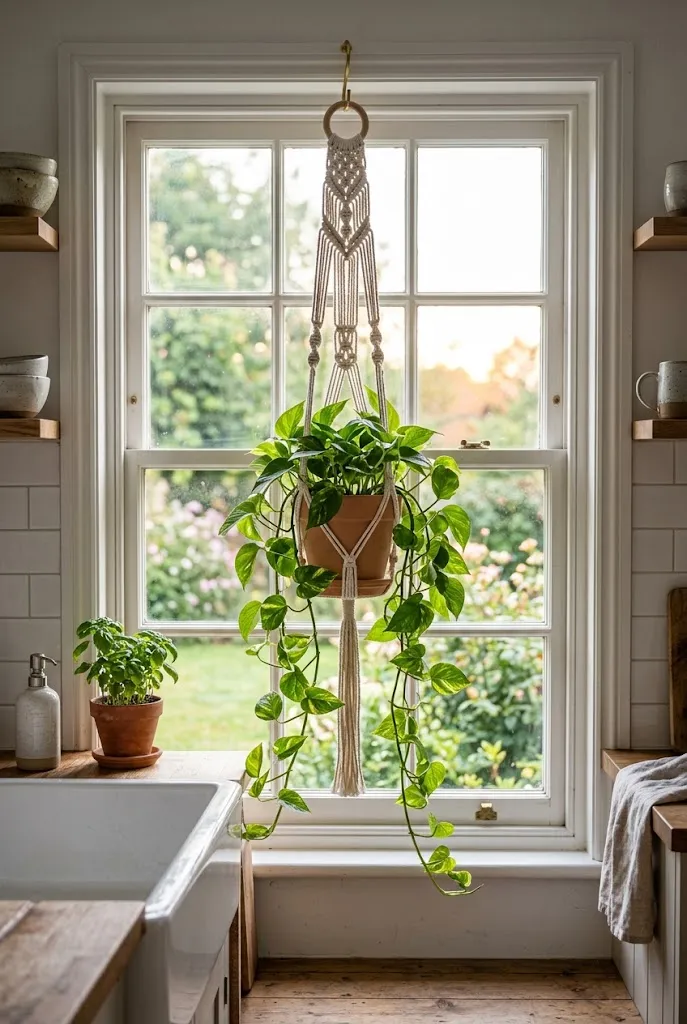
No 70s space is complete without greenery. Hanging trailing plants like pothos, heartleaf philodendrons, or spider plants in handmade macramé plant hangers near a kitchen window brings organic life and vertical height to the room.
- Placement: Hang them in an empty corner, near the kitchen sink, or framing a breakfast nook window.
- Planter Pairing: Use simple terracotta pots inside the macramé holders for an earthy, unpretentious finish.
11. Choose Natural Wood Slats or Wood-Paneled Accent Walls
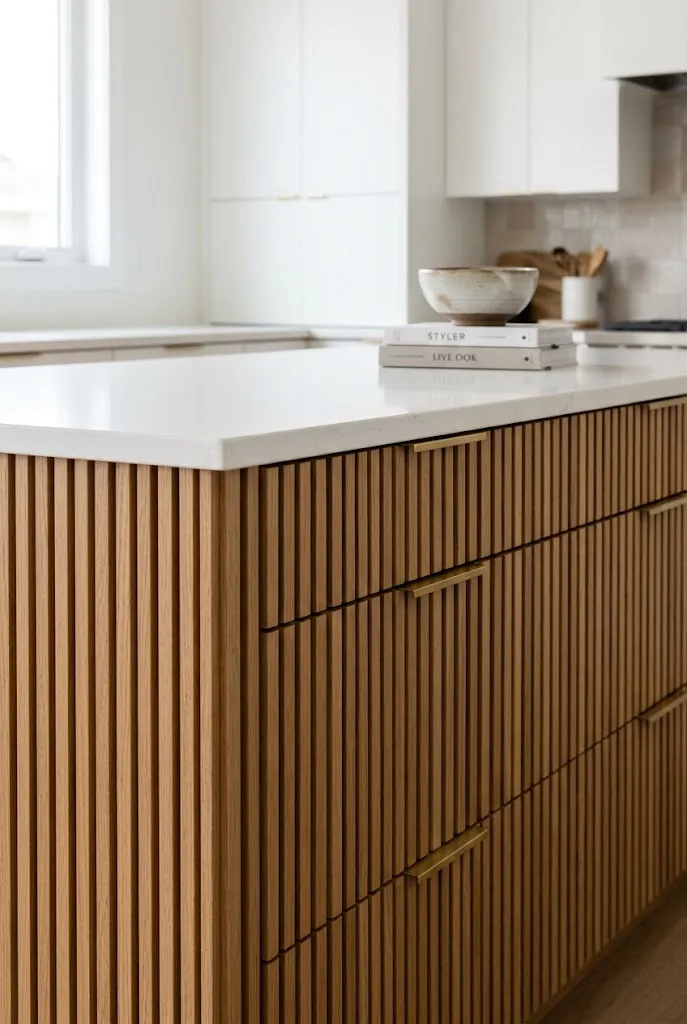
Warm wood paneling was a defining architectural element of the 1970s. Modernizing this trend with vertical wood slats or clean white-oak paneling on a kitchen island or accent wall adds sophisticated texture and architectural depth.
- Contrast: Pair vertical slat wood elements with smooth matte countertops to balance hard and soft textures.
- Finish: Stick to natural, matte-sealed wood finishes to avoid a heavy, dated look.
12. Set Up a Cozy Retro Breakfast Nook with Vinyl Seating
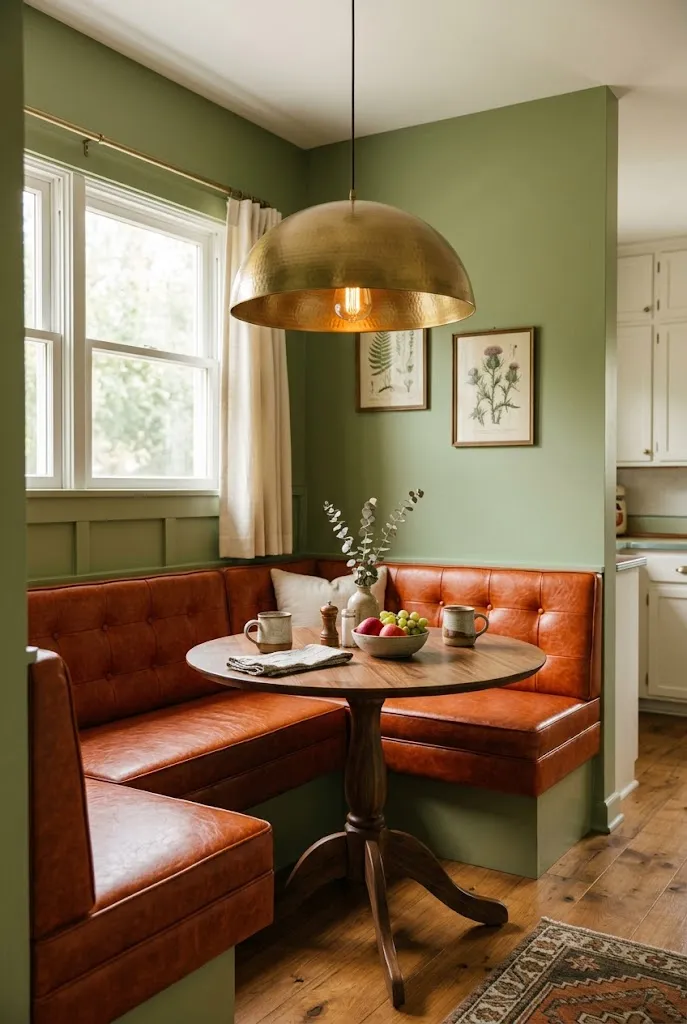
If space permits, carve out a dedicated breakfast corner reminiscent of 70s diner culture or cozy eat-in kitchens. Built-in banquette seating upholstered in durable earth-toned vinyl or tweed creates an intimate dining spot.
- Table Style: Pair the seating with a round pedestal tulip table or a vintage walnut drop-leaf table.
- Lighting: Hang a low-slung dome pendant directly over the table to anchor the zone.
13. Install Brass or Brushed Bronze Period-Appropriate Hardware
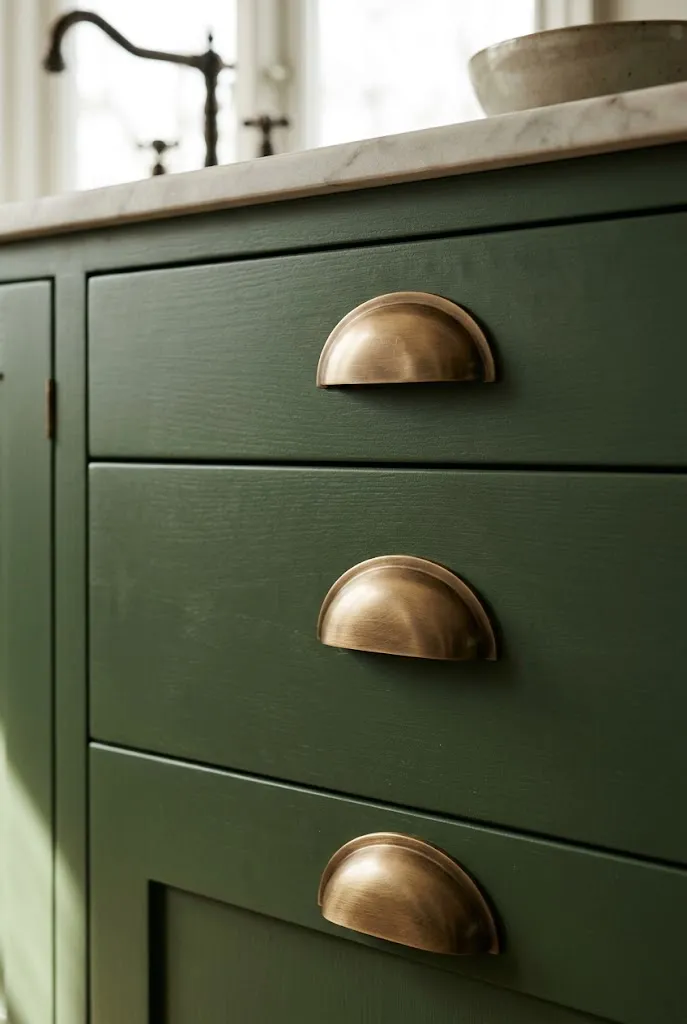
Hardware acts as the jewelry of the kitchen. Swapping out generic knobs for heavy brass ring pulls, brushed bronze T-bars, or organic curved handles immediately elevates plain cabinets with a retro touch.
- Finish Consistency: Try to match your cabinet hardware with your lighting fixtures and faucet finish for a cohesive look.
- Tactile Quality: Choose hardware with a bit of weight and texture to enhance the sensory experience of the kitchen.
14. Display Funky Retro Cookbooks and Curated Kitchen Decor
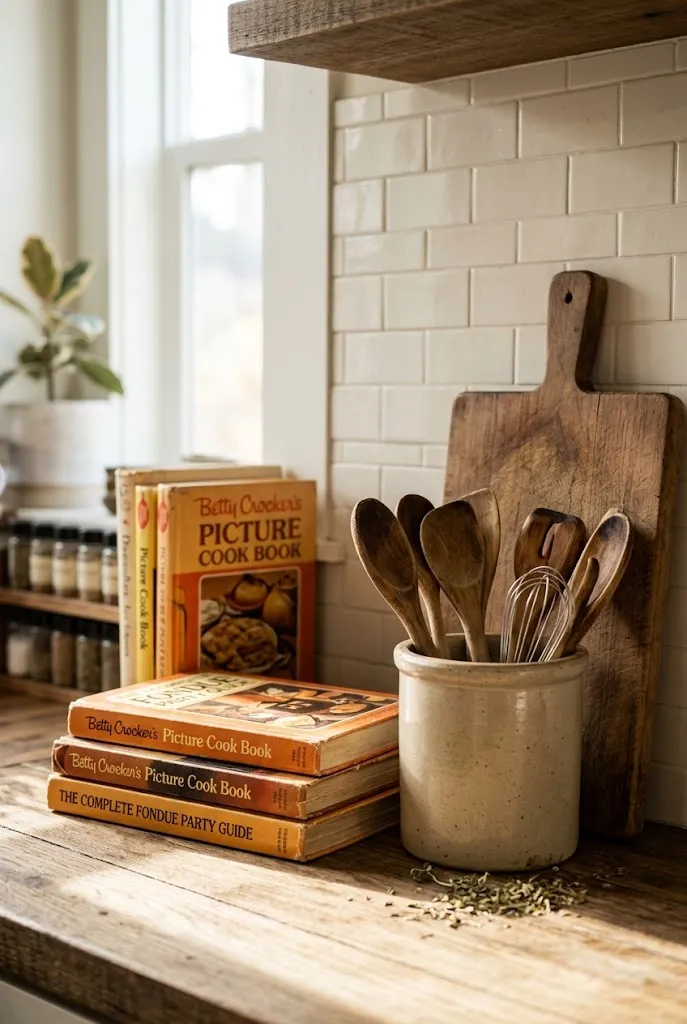
Personalize your countertops by displaying vintage cookbooks (think classic 70s Betty Crocker or fondue guides), ceramic utensil crocks, and wooden cutting boards leaned casually against the backsplash.
- Functional Styling: Keep frequently used tools in heavy stoneware crocks for an effortless, lived-in culinary workspace.
- Color Pop: Vintage cookbook covers often feature wonderful retro typography and warm color palettes that enhance the theme.
15. Balance the Look With Modern Neutral Walls and Countertops
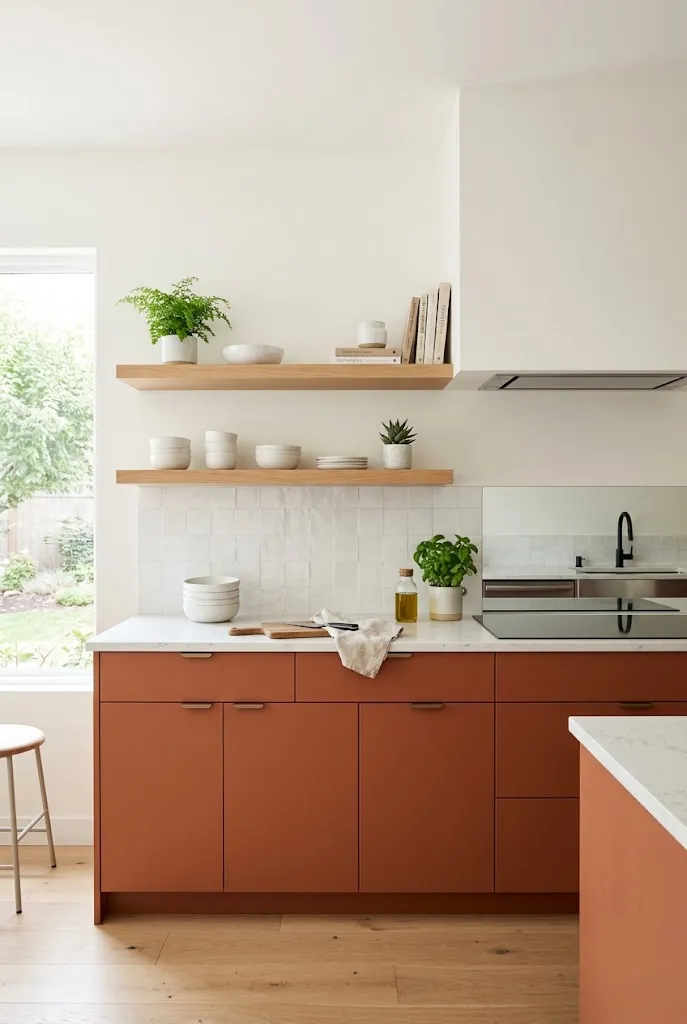
To keep your 70s vintage kitchen from feeling like an authentic time capsule (or feeling overwhelming), balance bold retro elements with clean, modern neutrals on your walls and primary workspaces.
- Wall Color: Keep surrounding walls a soft, warm chalk white, creamy ivory, or gentle greige to let your feature cabinets and tile shine.
- Breathing Room: Clean lines on your primary work surfaces ensure the kitchen feels fresh, functional, and tailored for contemporary living.